



Five pieces of test equipment to keep you safe
The importance of electrical test equipment for workplace safety
It is always good to reassess what’s in your toolkit, checking you have everything ready for whatever job comes along. For anyone who works with electricity, test equipment is a priority and in this article, we look at five key pieces of kit designed to keep you and others safe out on site.

1. Lock off kits
With the average cost of health and safety fines rising and many serious accidents at work due to contact with electricity, compliance with Electricity at Work Regulations is clearly a priority for all.
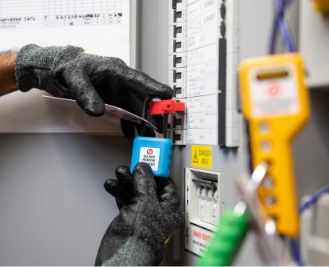
Lockout kits make it easy to ensure all types of circuits can be de-energised and properly isolated prior to maintenance of plant and equipment, preventing potentially fatal accidents and enabling compliance with HSG85.
The LOKKITBASE and LOKKIT2PLUS kits both include standard miniature circuit breaker (MCB) locking off devices and the miniature LOK10 and LOK11 for when access is limited and there is not enough space for a conventional lock. The kits include a PAD11RD padlock with a unique serial number on both key and padlock, plus a marker pen and tags to ensure immediate and clear identification of circuits, work areas and personnel. For added safety, each lock is supplied with just one key, to ensure a circuit cannot be inadvertently unlocked by another user.
2. Voltage Indicators and proving device
Nothing is more dangerous than trusting a defective voltage indicator to test for a dead circuit. Safe electrical work requires the use of a voltage indicator that has been proved with a proving device before and after use.
The Martindale VIPD150-S Safe Isolation Kit contains the VI-15000 voltage indicator and the PD690SRD proving device, enabling you to comply with health and safety recommendations for safe working.
The VI-15000 CAT IV design not only provides protection against voltage transients, but also includes a high wattage resistor that will limit the current in the event of damage to the cable in accordance with BS EN61243-3. The protection is built in where it’s needed, in the handheld probe assembly rather than just in the instrument providing superior protection for the user to other testers.
The heavy-duty, double insulated cable, large finger guard and a retractable, lockable prod sheath make this the safest, most durable and reliable instrument of its type. The VI-15000 complies with the requirements of the HSE guideline GS38.
3. Non-contact detector
Designed for proving live, these pen-shaped detectors feature a clip, which is ideal for carrying in a pocket or tool belt so that the tester is always to hand for electricians or maintenance staff working at height or in difficult to access locations.
All Martindale non-contact detectors feature a bright LED torch at the point of measurement, together with both audible and visual indication, making them ideal for all types of work area including locations that are poorly lit and have a limited line of sight. The extended clear probe tip makes it easier to identify the source of the live voltage or magnetic field through improved access and brighter indication.
4. Clamp meters
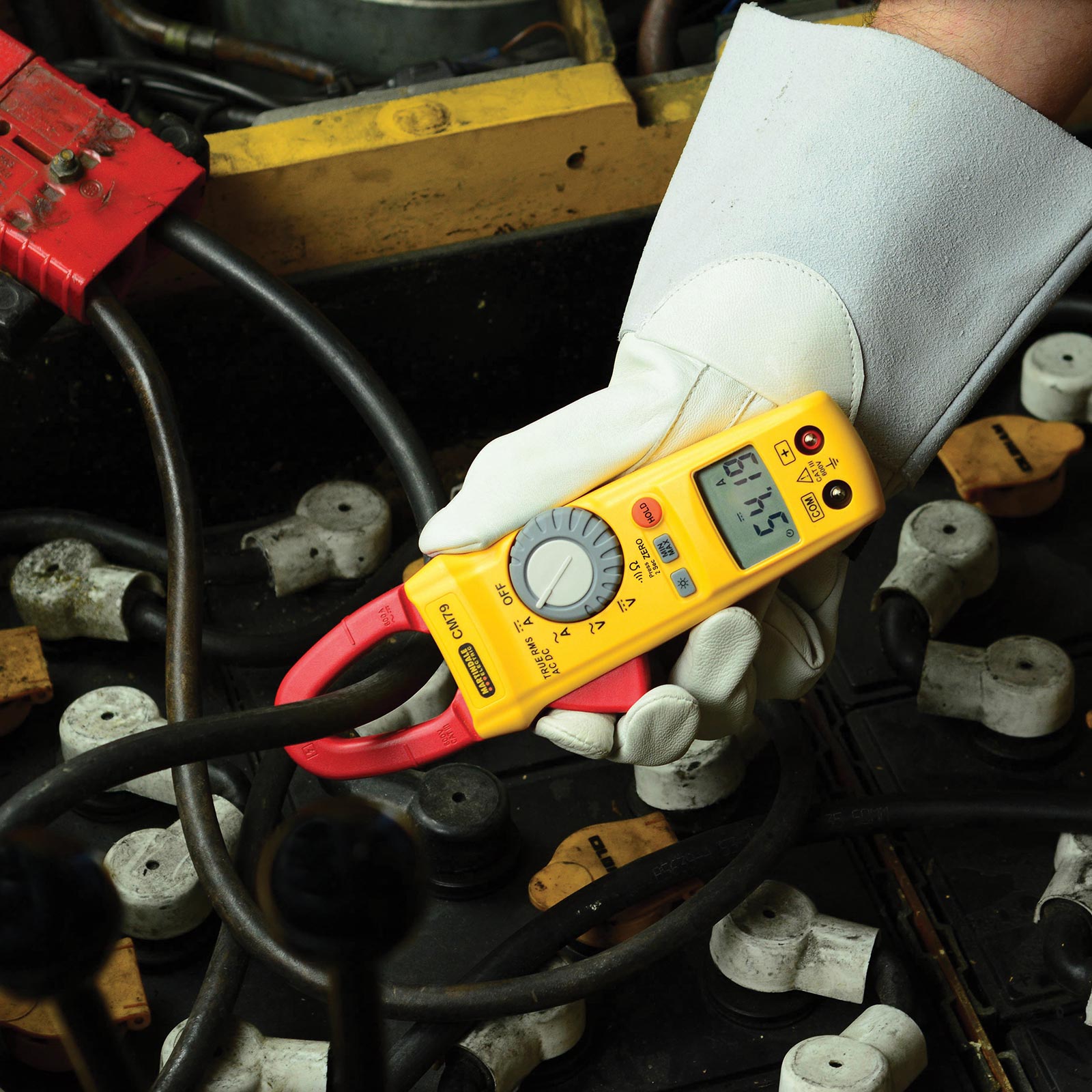
The CM Series range of professional clamp meters make it easy to choose the right tool for the job every time. Whether it’s low current AC, or DC for solar PV and battery systems, the equipment gets the job done. The pocket-sized clamp range includes the CM55 AC Clamp, CM57 TRMS AC Smart Clamp and the CM79 TRMS AC/DC Clamp, combining outstanding specification and measuring capabilities with reliability and ease of use.
The clamps meet the exacting requirements of electricians and service teams working on both AC and DC systems, from basic AC measurements through to min/max monitoring of start-up and charging currents. All the clamps are auto-ranging and measure current to better than 2% accuracy.
5. Socket Testers
Socket testers are not an alternative to the formal verification of wiring installations; nonetheless, as a first line indicator, they are an essential tool. There are many socket testers on the market for checking 13A outlets such as the and BZ and EZ ranges from Martindale electric. In addition, the comprehensive CP series from Martindale, provide a quick and easy way of confirming 16 and 32 Amp (A) sockets are wired correctly using three bright illuminated LEDs and feature an on-tester look up chart for fast and simple fault diagnosis.
Key Takeaways
- Electrical test equipment is essential for maintaining workplace safety and supporting compliance with the Electricity at Work Regulations
- Lockout kits help ensure circuits are safely isolated and clearly identified before maintenance work begins, supporting compliance with HSG85.
- Voltage indicators should be used with a proving device before and after testing to help confirm circuits are dead and support safe working practices.
- Non-contact detectors provide a quick and convenient way to help identify the presence of live voltage without direct contact. Those with built-in torches can be particularly useful in poorly lit environments.
- Clamp meters offer accurate and reliable current measurement across a range of applications, including AC and DC systems.
- Socket testers provide a simple first-line check to help confirm correct wiring of electrical outlets.