



Safe installation of Electrical Smart meters
Smart meters are modernising the UK’s energy system replacing traditional meters in homes and small businesses. These devices automatically take regular energy readings and communicate them directly to the energy supplier negating the requirement for manual meter readings and reducing the need for estimated bills. The availability of this data also gives the utility customer information to help track energy usage and therefore should help reduce bills by allowing more detailed management of their usage.
According to the National Audit Office report on the roll out of smart meters dated June 2023 over 32 million Smart meters were installed in homes and small businesses in the UK, equating to approximately 57% of all gas and electricity meters being of the smart or advanced type. Of the 32 million installations the highest proportion is for electricity meters at between 18 and 19 million installations.
The sheer size of the Smart meter program and in particular the proportionally high number of electrical installations has required the recruitment of a large number of installers to undertake the replacement program. As with any electrical work, this must be conducted by qualified persons, in this case, specifically trained in line with the current Smart meter installation requirements. The use of electrical test equipment forms an essential part of the installation process. The equipment used must be in line with the safety category and voltage rating of the installation and, crucially, be capable of being used to implement electrical industry standard safe isolation procedures.
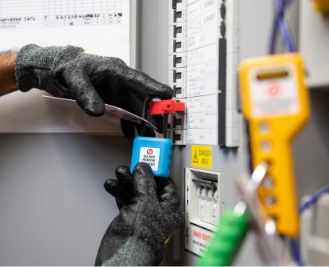
To ensure safety in the workplace, in this case, the meter installation, safe isolation is critical, proving without doubt that there are no live voltages present prior to the installation. The use of a voltage indicator is an essential part of this process. There are many types of test equipment which can indicate a voltage is present either by a contact or non-contact method; however, a contact voltage indicator which does not use batteries should always be used as this will alleviate any potential false reading caused by dead or malfunctioning batteries.
The safe isolation procedure starts with checking the voltage indicator against a known source, such as a proving unit, and then testing the circuit with the indicator to check it is not live. Lastly, the voltage indicator must be once again tested against the known source to prove the tester has not failed during testing. A known voltage source could be used to check the indicator, but a dedicated proving unit is more convenient, faster and safer. A proving unit will ensure that all LEDs on all indicator ranges are working, again safeguarding against incorrect readings due to a faulty LED. For supply-side testing, a suitable CAT IV rated voltage indicator should be used with a compatible proving unit.
Non-contact voltage detectors do have a place in the Smart meter installation process. Whilst these units cannot reliably be used to prove dead, they can be used to indicate live cables, and most will have an illuminating probe tip to show the presence of a voltage. Some units with desensitised detection can also distinguish between phase and neutral conductors. When using these devices, all safety guidance should be observed.
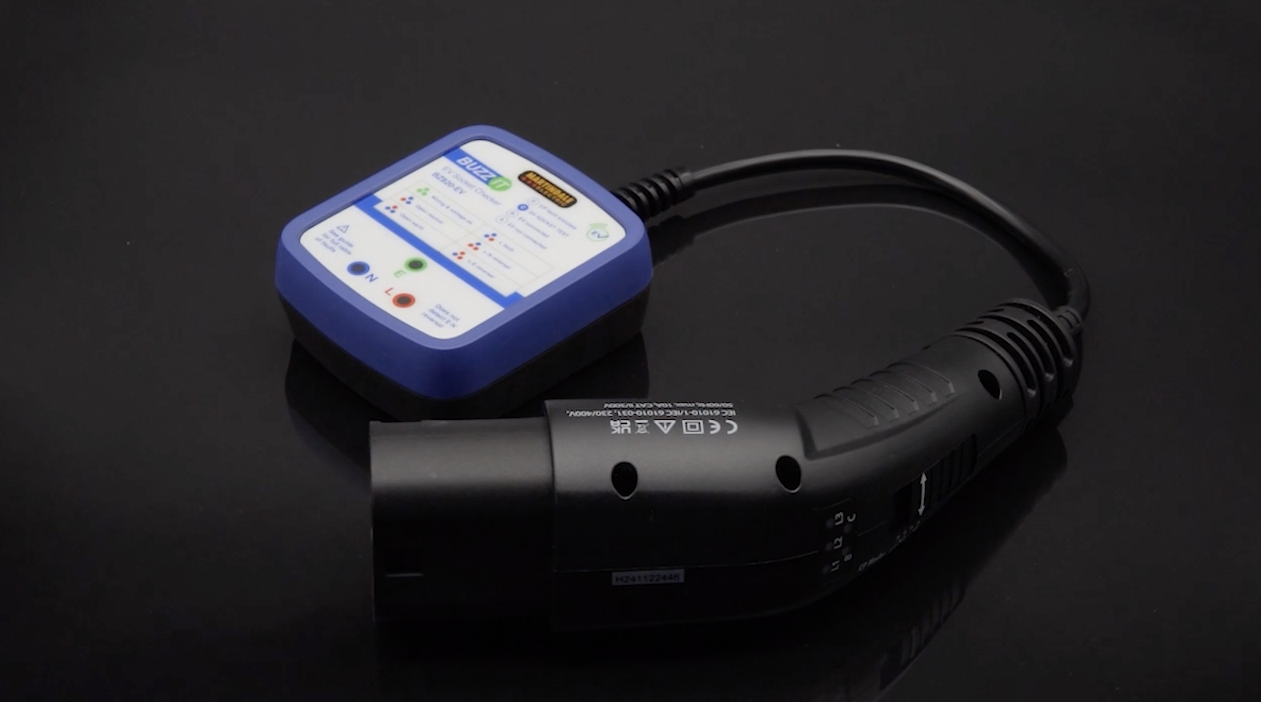
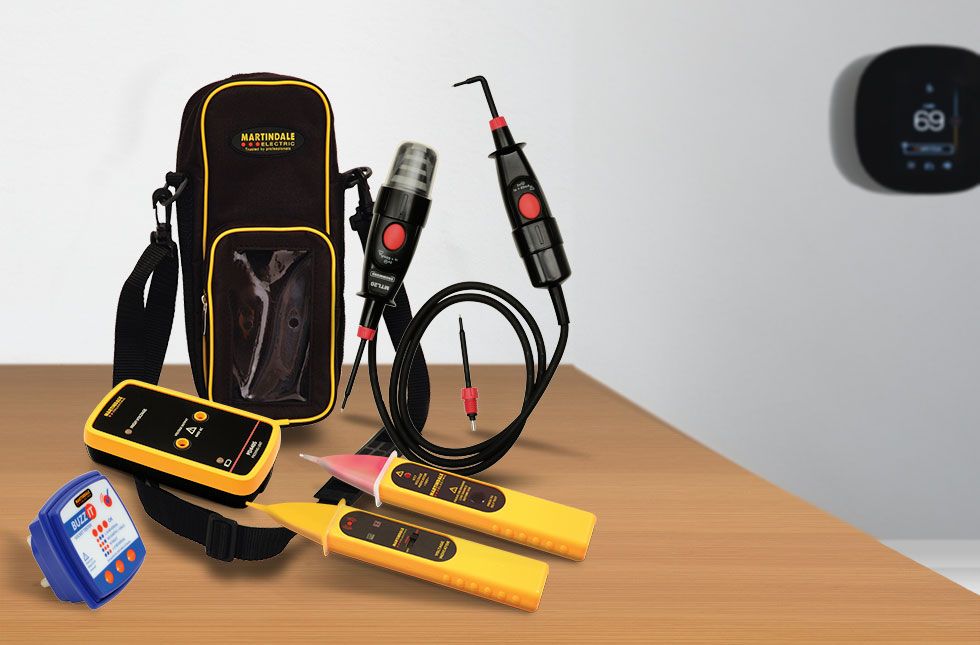
To ensure the Smart meter installer has everything necessary for electrical testing, specific electrical installation kits are available on the market. Martindale, for example, offer the complete solution to enable safe working practices during the installation of Smart meters. The Smart Meter Kits (SMKIT) contain all the test tools needed to ensure safe isolation procedures can be implemented during the installation process. These comprehensive kits include a non-contact and contact voltage indicator. A Drummond test lamp with a matched proving unit for CAT IV supply-side safe isolation testing is included. For additional checking of 13A outlet wiring, a Buzz-It check plug is included in the SMKIT10 and SMKIT20.
Ideal for CAT IV supply side testing, the Drummond test lamps use high-intensity LEDs to display discrete voltage levels over a 360-degree viewing angle, making them ideal when cables are difficult to reach or when working on outdoor wall mounted electric meter boxes in bright sunlight. These units are a very reliable solution for identifying hazardous voltages.
The Drummond MTL20 Test Lamp included in SMKIT20 has the benefit of a dual impedance function to help alleviate false indications due to induced phantom voltages in a cable. The unit incorporates two test buttons, one on the body and one on the probe. The simultaneous depression of both buttons enables the unit to draw a high current, allowing the user to easily differentiate between a phantom voltage and a hazardous persistent voltage. In addition, the need to use both hands to depress the buttons on the tester ensures the operator cannot inadvertently touch any potentially live parts energised during the test.
The Smart meter installation program will continue for several years, so using safe, long lasting, reliable equipment and adhering to safety procedures is paramount. Martindale offer the complete solution to enable safe working practices during the installation of Smart Meters. The SMKITs contain all the test tools needed to ensure safe isolation procedures can be implemented during the process. The SMKITs contain all the test tools needed to ensure safe isolation procedures can be implemented during the process.