





Need to know more about safe isolation procedures?
Understanding safe isolation and workplace electrical risk
Safe isolation procedures are in place to ensure that workers on site are not exposed to danger when working on or near live electrical systems and equipment. Both the standards for the equipment and the potential penalties for non-compliance have changed in recent years.
With around 1,000 serious accidents in the workplace linked to electricity and with a number of fatalities each year, it’s clear to see how following a simple safe isolation procedure and using the correct equipment can keep your team safe and avoid heavy penalties, which can exceed £10M for non-compliance. In fact changes to sentencing guidelines for health and safety offences have resulted in average fines trebling.
What do electricians and maintenance teams need?
The essential equipment needed to stay safe and achieve compliance with the regulations are:
• Lockout devices
• A clear method of labelling the hazard
• A dedicated voltage indicator
• A proving unit to verify the voltage indicator.

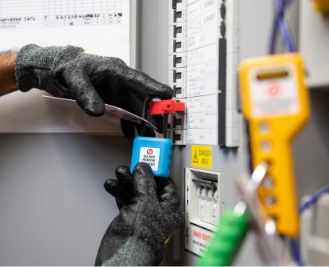
Martindale LOKKIT1 comprehensive locking off kit
Lockout, Tagout (LOTO) essential kits
Comprehensive locking off kits are available to ensure the right locking off device is always to hand. A basic kit should include the following, a selection of MCB & breaker locks, a padlock with a unique key, a multi-lock hasp if more than one person is working on a system and lock out tags & warning labels.
Learn more about lockout tagout.
Voltage indicators and circuit testing safety
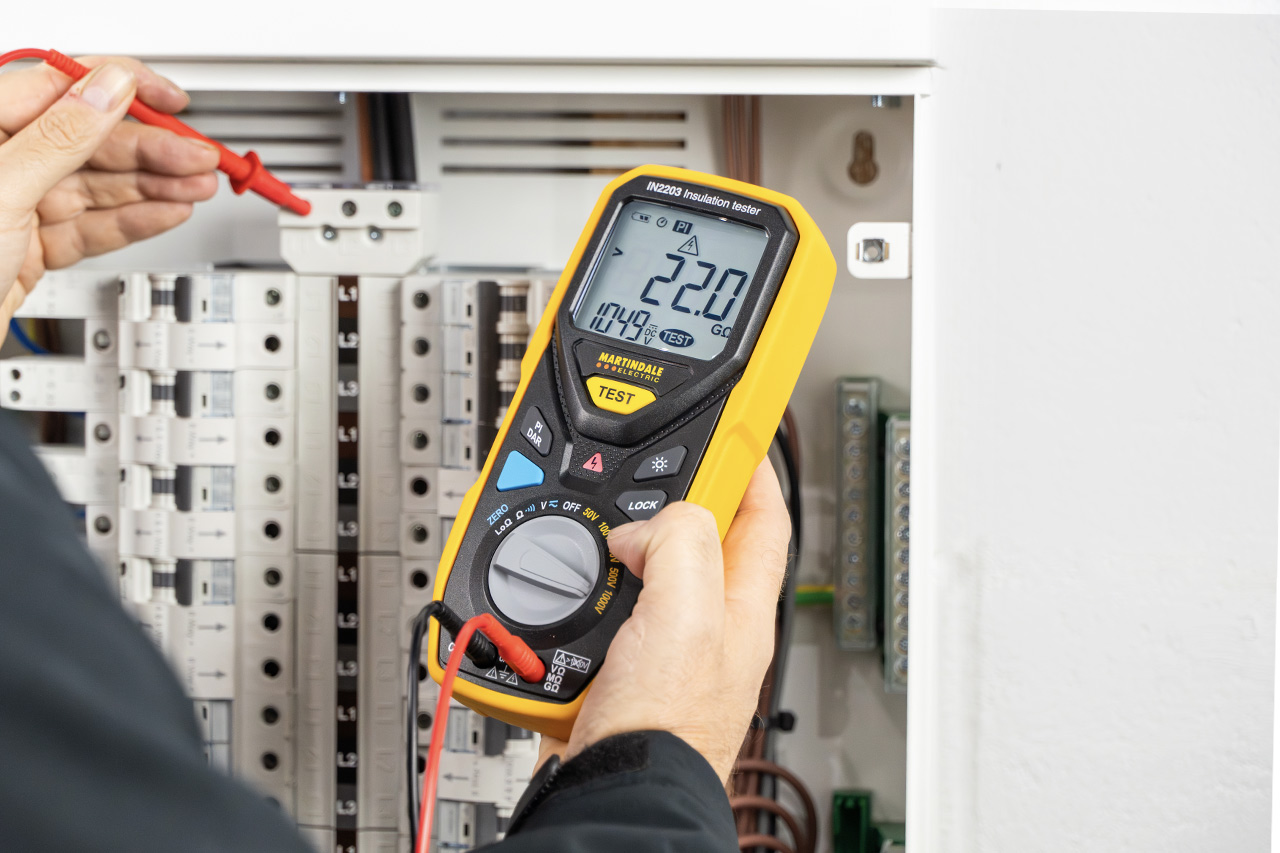
Locking off the circuit correctly is just one part of the procedure. Before carrying out any work on the circuit, it’s essential to prove the circuit is dead. Circuits are frequently mislabelled so there is no certainty that the correct circuit is locked off.
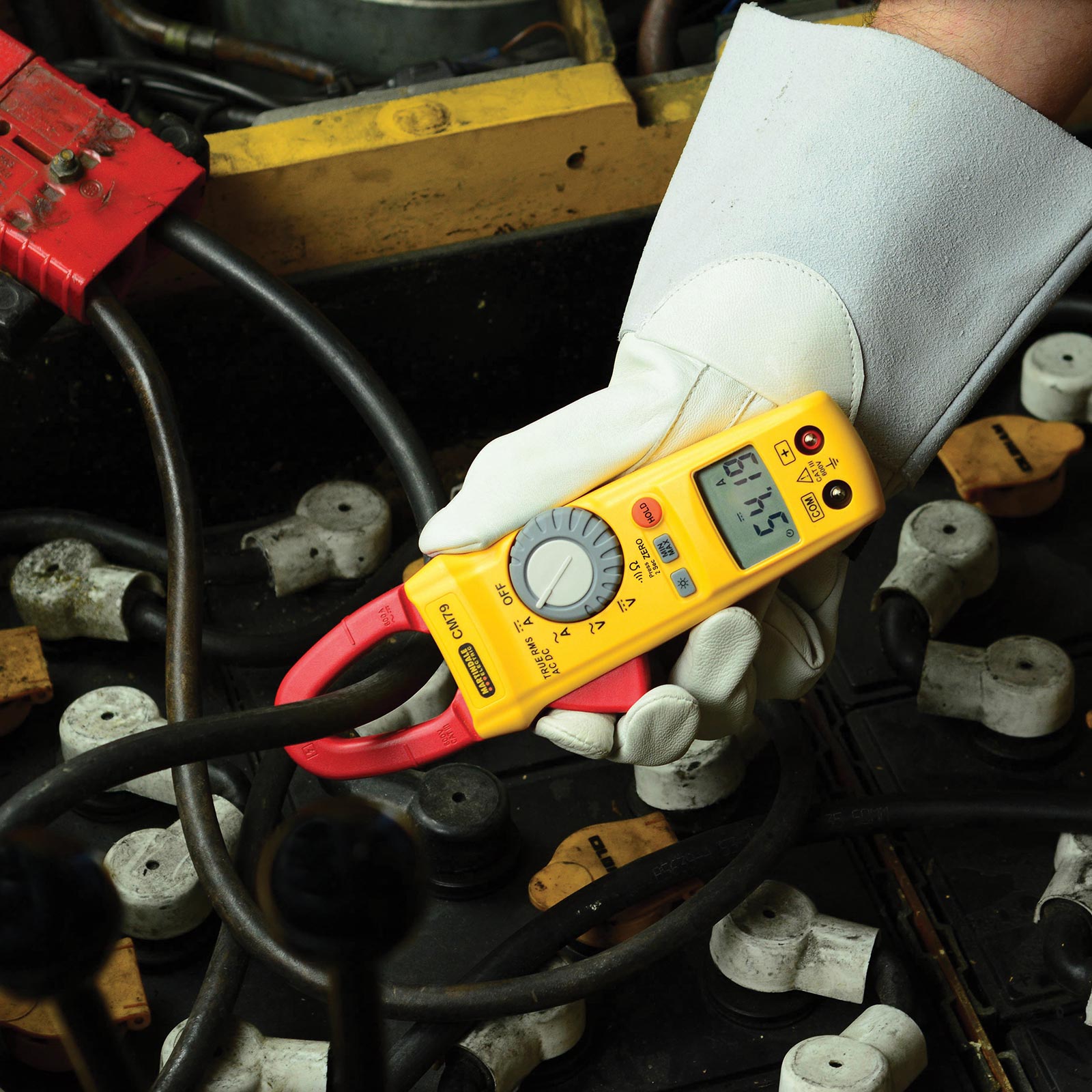
Multimeters are not suitable as it’s all too easy to select the wrong range. They rely on battery power to function, so it’s possible to make a false “dead” reading on a live circuit if the batteries are flat.
The list of suitable voltage indicators includes the Martindale VI13800 and VI15000. These are fully compliant with GS38 and the latest international standards and have been designed for safety and reliability with no batteries, ranges or switches to worry about.
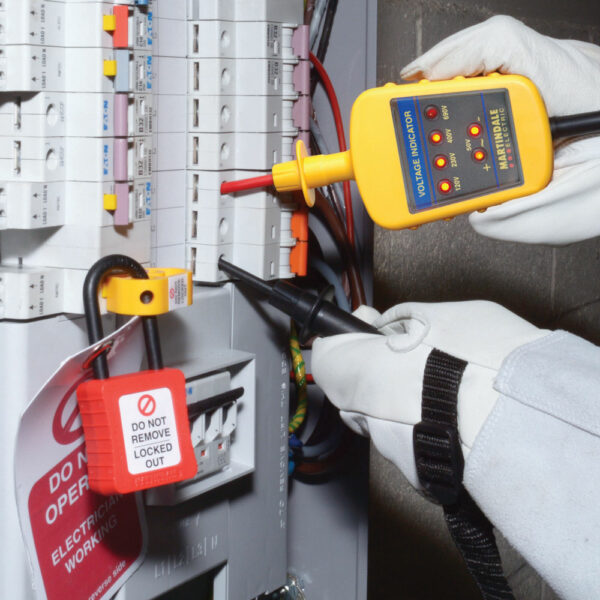
Martindale VI15000 Voltage Indicator
Proving a circuit dead
The procedure for proving dead is to test the voltage indicator against a known source, such as a proving unit, then test the circuit, then test the voltage indicator against the known source again to prove the tester is functioning properly.
It’s recommended to use a dedicated proving unit matched to the voltage indicator to fully test that all LEDs on all ranges are working. A proving unit is safer than the mains and provides a live source wherever you are working.
All Martindale voltage indicators are available in kits with matching proving units. They are supplied in Test & Go carry cases, saving time on-site and making sure both essential items are always to hand.
All-in-one safe isolation kits provide a simple solution

Martindale VIPDLOK138 complete safe isolation kit
Martindale have simplified selecting the right tools by offering complete solutions. The VIPDLOK and VIPDLOKPRO kits include the industry standard voltage indicators, matching proving units and locking off devices together with hazard warning labels. They are widely specified by contractors and maintenance teams to ensure compliance with health & safety regulations.
Key Takeaways
- Safe isolation procedures help prevent electrical accidents and support workplace compliance with safety regulations.
- Correct equipment is essential, including locking devices, hazard labels, compliant voltage indicators, and proving units.
- Multimeters are not suitable for isolation testing due to battery reliance and potential range selection errors.
- The recommended safety check is to test the voltage indicator against a known source, then test the circuit, and retest the indicator against the source.
- All-in-one safe isolation kits simplify compliance by combining testing and lock out / tag out equipment.
Essential resources to keep your team safe
Get free access to essential articles, posters, and offers on practical City & Guilds accredited training around the UK. Keep your team safe and achieve compliance with the latest electrical safety standards by following the correct procedures.
Find out about:
• Who is responsible & what you need to do
• Key electrical regulations & guidance
• HSG85 Electricity at Work safe working practices
• GS38 changes affecting electrical test equipment
• How to select the right test equipment to HSG85 and GS38
Explore our Martindale Resource Hub