




STOP. No Check. No Contact! Hazards and Solutions
Proving dead effectively and safely is vital when it comes to safe isolation and the safeguarding of people and assets. Introducing a robust safe isolation procedure helps reduce the number of electricity-related injuries within the workplace. However, standard safe isolation processes do not include checks to prevent some potential injuries caused by coming into contact with unexpectedly live metal parts.
Safe Isolation process
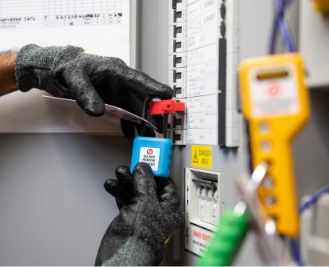
There has been significant activity from both electrical industry bodies and electrical test equipment suppliers, driving awareness around the subject of safe isolation. This process states that the relevant breaker or switch has to be identified, locked off correctly and tagged. The circuit should be verified dead before proceeding using a dedicated, compliant, voltage indicator and a matched proving unit. This is to confirm that the potentially live conductor is dead and verify the indicator is functional both before and after testing.
Additional Hazards
Despite the rigorous process of safe isolation, other types of electrical hazards can still be present when working on electrical systems. One such issue is the injuries caused to engineers, contractors, electricians, and others by encountering unexpectedly live metal parts including metal casings on equipment or appliances, pipework, plumbing and other types of metalwork which should be earthed. This invisible danger can be present in any workplace situation ranging from simple domestic wiring through to commercial and industrial installations.
There are many types of faults which can cause live metalwork. Including, incorrect or hazardous wiring, trapped cables and Protective Earth Neutral (PEN) faults. Widely discussed in the industry, the PEN fault is where a break or “open circuit” occurs in a PEN conductor, which serves as both the neutral and protective earth. A broken or faulty PEN conductor can cause dangerous voltages to appear on metalwork, creating an electric shock risk, as well as the potential for fires, and equipment damage.
Additional safety checks
Touch Voltage
Touch voltage is the electrical potential difference between exposed metalwork and the earth due to a fault condition. The standard safe isolation process does not check for potentially live metalwork, so performing a touch test is an essential addition. There are a number of tools available which are used for performing this test, primarily non-contact and single-pole contact indicators. Unlike a compliant safe isolation voltage indicator, both require batteries and should always be fully checked for functionality prior to use.
Non-contact voltage detectors should always be used with caution as they can be and are often sensitive to other signals such as static electricity. Care should also be taken regarding the voltage threshold of the indication to ensure that unsafe voltages can actually be detected. It’s also not possible to prove they are working correctly with a standard proving unit.
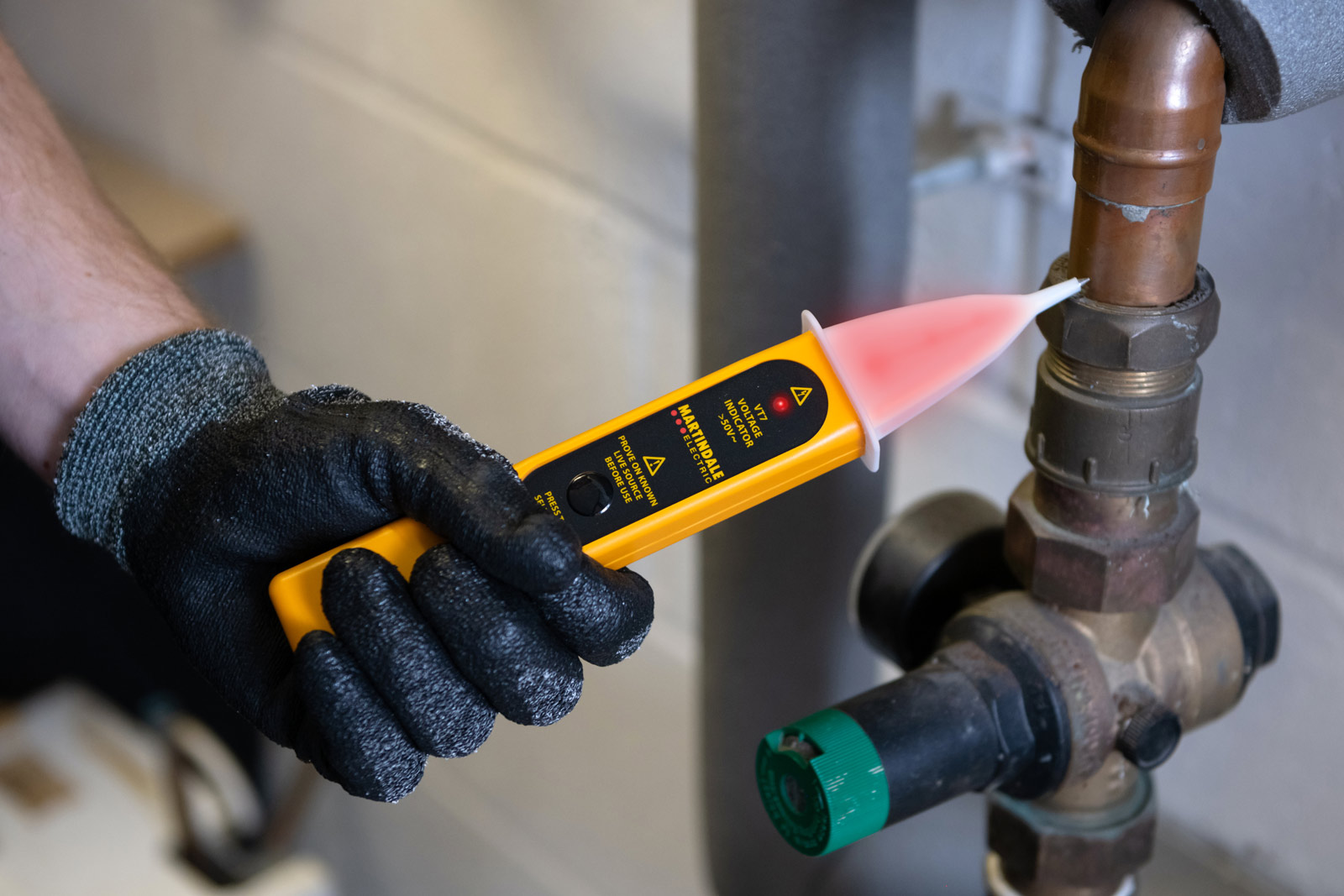
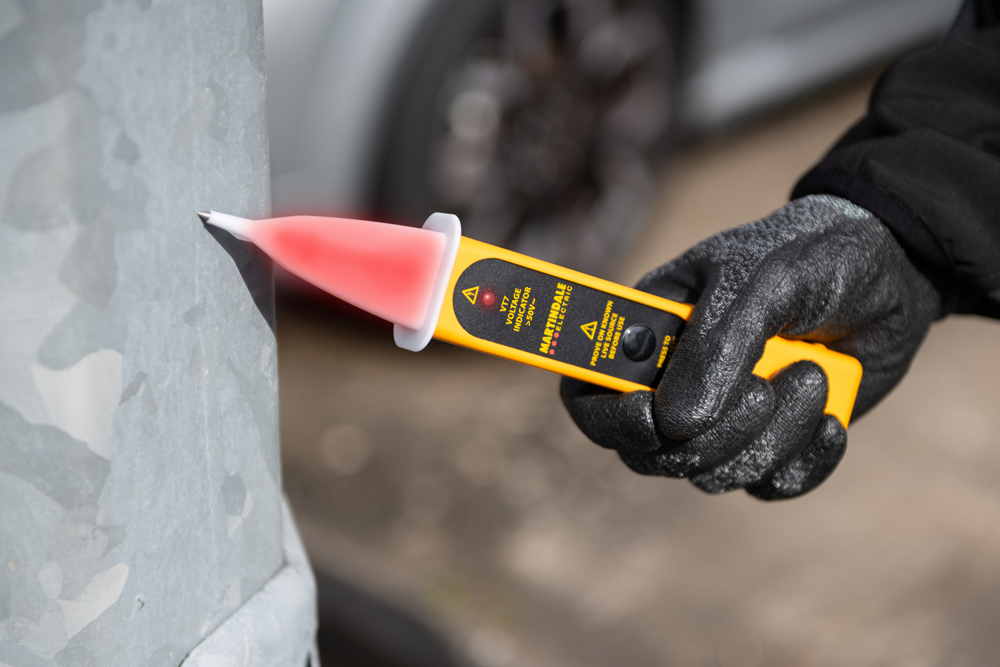
Single-pole contact indicators are a more reliable solution, and devices such as the Martindale VT7, can be incorporated into touch test safety procedures to help identify potential issues. The VT7 is a single–pole contact voltage indicator which detects AC voltages of 50V-600V with audible and bright LED indication. The tester has a self-test function and is IP54-rated for indoor and outdoor use. Its durable construction makes it suitable for both industrial and domestic applications. The unit is GS38 compliant and is ideal for detecting live metalwork.
Diverted Current Fault
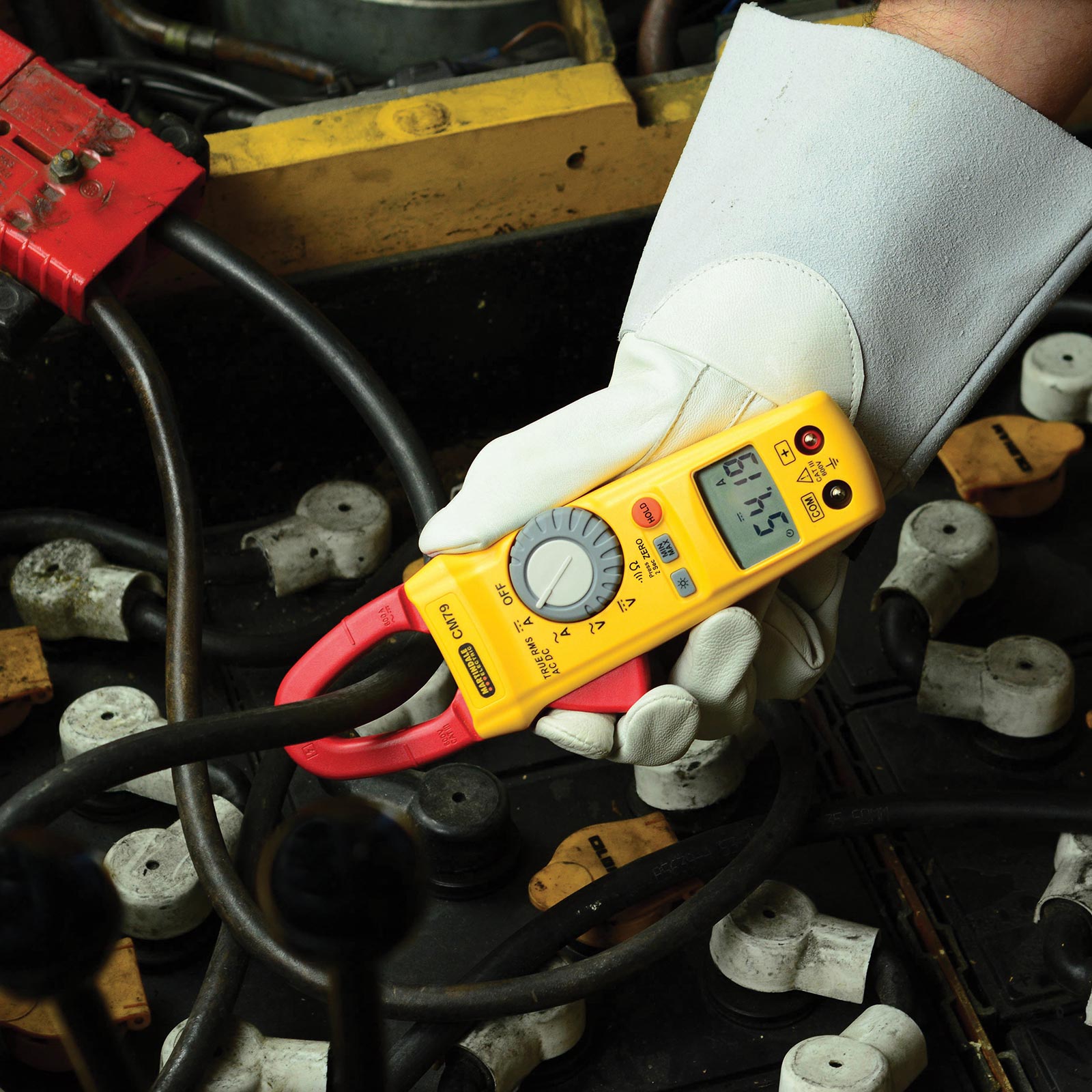
A diverted current fault occurs when electrical current flows away from its intended path due to damaged insulation, earth or neutral failure and other types of faults. This can create an abnormal current flow, causing overheating, equipment damage, and again potential electric shocks from unexpectedly live metalwork. While this fault is present the circuit may appear to be working correctly. Diverted current can be identified by checking for current flow using a standard clamp-meter, such as the Martindale CM79. Measuring the earthing conductor while the circuit is supplying load can help identify diverted current. Low-level leakage currents would be considered normal, but readings of several amps indicate a potential fault condition, possibly an open circuit PEN conductor.
The CM79 is a pocket-sized high-performance True RMS AC/DC Clamp meter measuring AC/DC current, AC/DC voltage and resistance with continuity test. The compact, rugged design enables accurate and reliable current measurements down to 10mA resolution in applications including diverted current measurement, PV installations, battery monitoring and electric vehicles.
Safety first
Safe isolation is neither complex nor costly but is vital for compliance with the Electricity at Work Regulations and for preventing harm. Lockout devices, using compliant voltage indicators, and proving dead with proving units are central to the process. Being aware of the risks associated with live metalwork is also key and, before working on any installation, precautions should be taken to identify hazardous touch voltages on exposed or extraneous metal parts.
By embedding these procedures, workplaces can significantly reduce the risk of electrical accidents. Safety must always remain the priority, and safe isolation provides the foundation for protecting both people and infrastructure.
If the metalwork is not checked for being live don’t touch it: STOP. No check. No contact…