




Proving Dead To Keep You Safe
Why safe isolation and proving dead procedures are critical for electrical safety and compliance
With clear directives from the Health and Safety Executive (HSE) that live work should never be undertaken where there is the option to work dead, establishing an effective electrical safe isolation procedure is critical when it comes to proving dead and keeping you safe.
Despite legislation designed to ensure that everyone goes home safely at the end of the day, electricity is still the root cause of about 1,000 accidents at work each year – with many more incidents inevitably going unreported. Failure to comply with the Electricity At Work regulations is simply not an option. The emphasis of enforcement is now as much about the potential risk to personnel as it is about actual incidents. Average fines have significantly increased in recent years and penalties are extended to all employees, including, for example, chargehands not only Directors, as per section 37 of the Health and Safety At Work Etc Act.
Proving dead – for the ultimate protection across the electrical infrastructure
Ensuring that workers are not exposed to danger when working on or near live electrical systems requires a combination of effective safe isolation procedures and equipment that meets the latest standards, including HSE GS38 guidance notes.
With over 95 years of experience in the development of electrical safety testing solutions, Martindale Electric specialises in safe isolation – ensuring that circuits have been de-energised and properly isolated prior to maintenance and modification – and is leading the charge for safer working to reduce preventable accidents.
Wherever possible and practicable, it is vital that engineers and maintenance teams work on dead circuits. By taking the time to identify risks and introduce steps to ensure that all equipment is electrically safe prior to starting work, it’s possible to protect employees and contractors working across the entire electrical infrastructure. Failure to use the right equipment can result in a circuit remaining live – with fatal consequences. So many incidents can be avoided with proper work planning as well as by selecting the right tools for the job.
When OFF doesn’t mean OFF
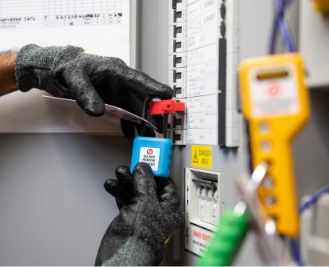
One of the most important elements of the safe isolation procedure – the selection and deployment of the right safe isolation equipment – can protect against serious injury and prevent loss of life. Whilst locking off the circuit correctly is an important step in the procedure, it’s not enough to assume that the circuit is subsequently dead because a particular isolation device has been placed in the OFF position. Although a particular circuit may be locked off, the neutral conductor can become live if an energized load on another circuit is connected to it.
Eliminate uncertainty with a vital cross-check
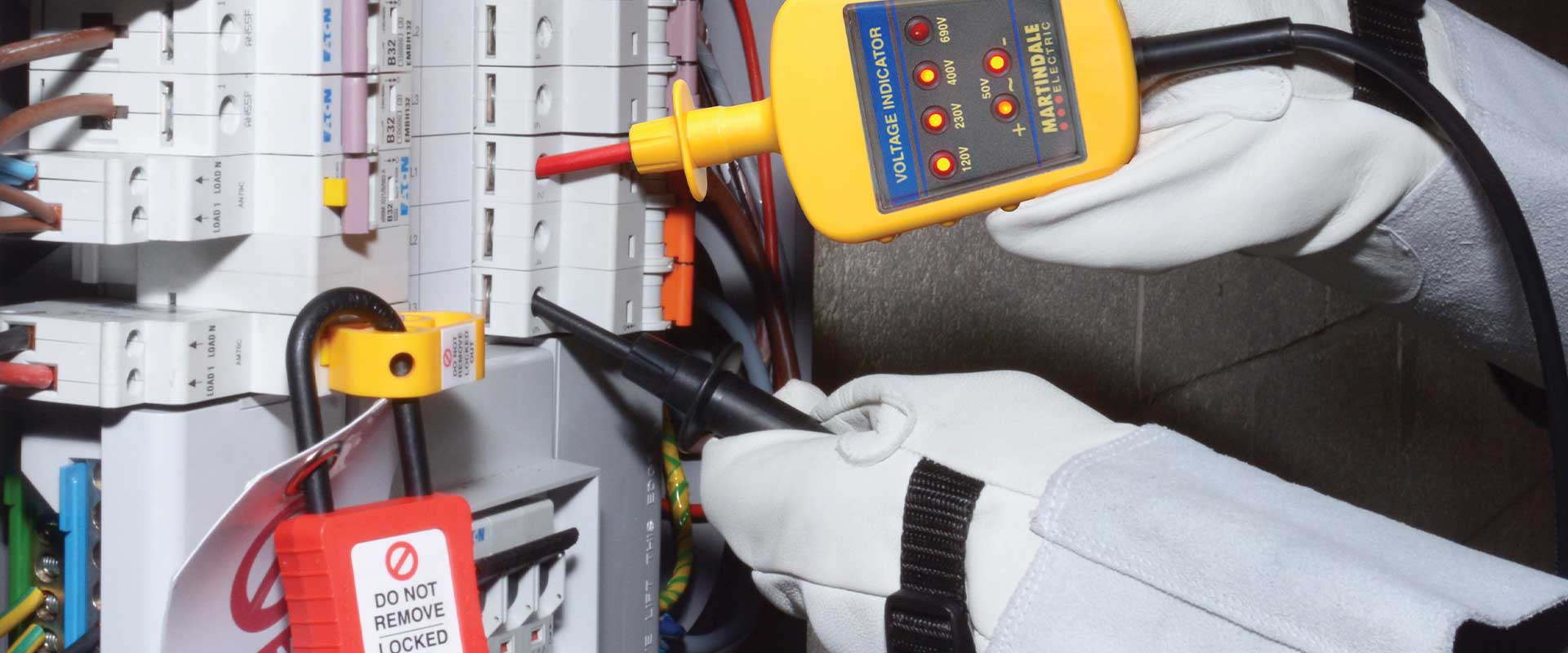
Guidance from Electrical Safety First – the UK charity working across the electrical industry and government to reduce deaths and injuries caused by electrical accidents – states that before carrying out any work on a circuit, contractors should use a dedicated voltage indicator (VI) and proving unit when proving dead.
Using voltage indicators and proving units correctly
It’s not uncommon for circuits to be mislabeled – which can be particularly dangerous as this provides no certainty that the correct circuit is actually locked off. Whilst it may sound obvious to use a voltage indicator and proving unit to prove dead, we know that there are still far too many instances where engineers might try to use a known live source to test a voltage indicator. The problem is that the known live source may only light some of the LEDs on the tester – whereas a proving unit will ensure that all the LEDs on all ranges are working, eliminating any uncertainty. A further issue is that a known live source may not be conveniently available, increasing the risk that the VI is not actually proved to be operating correctly.
Why multimeters and non-contact testers are not suitable for proving dead
As well as identifying the right tools for the task, with a wide range of equipment on hand, it’s as important to understand what should not be used as part of this critical process.
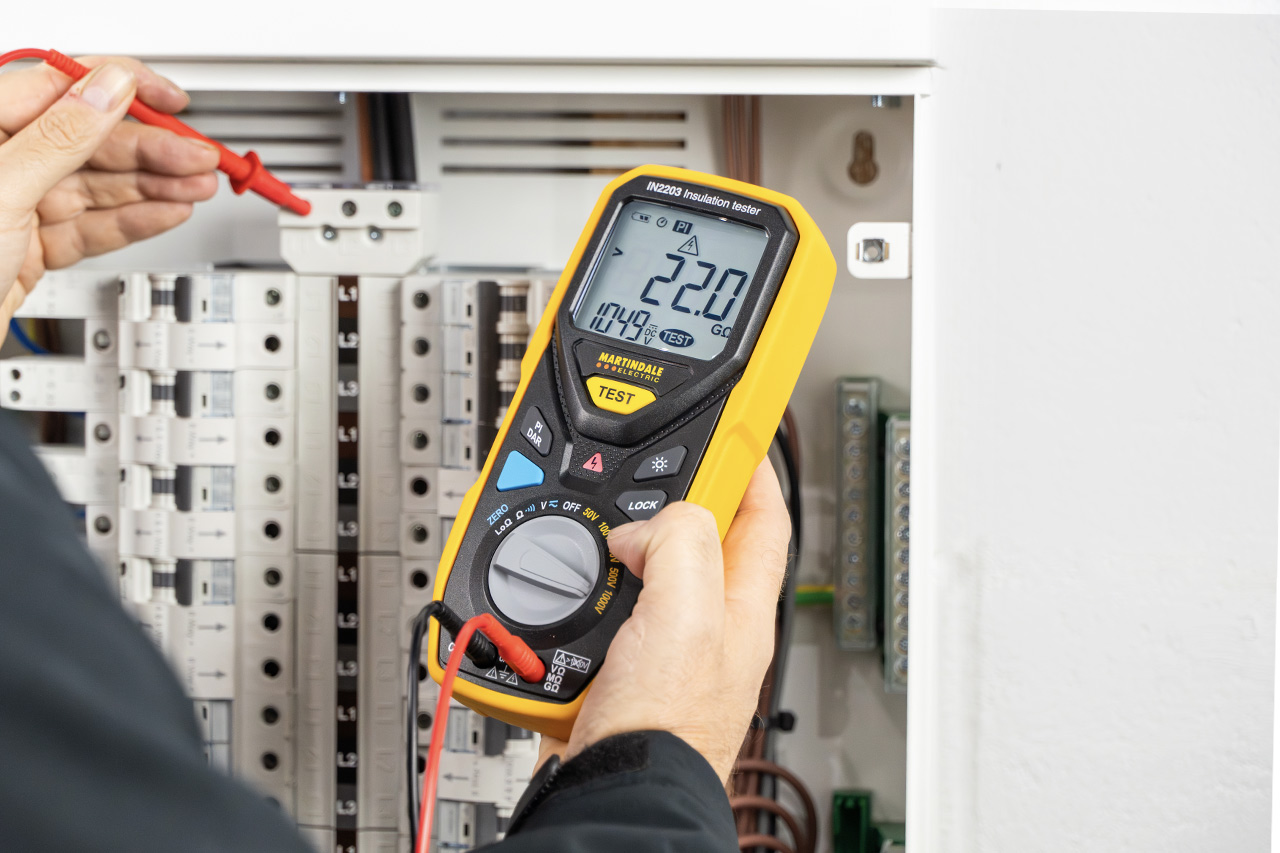
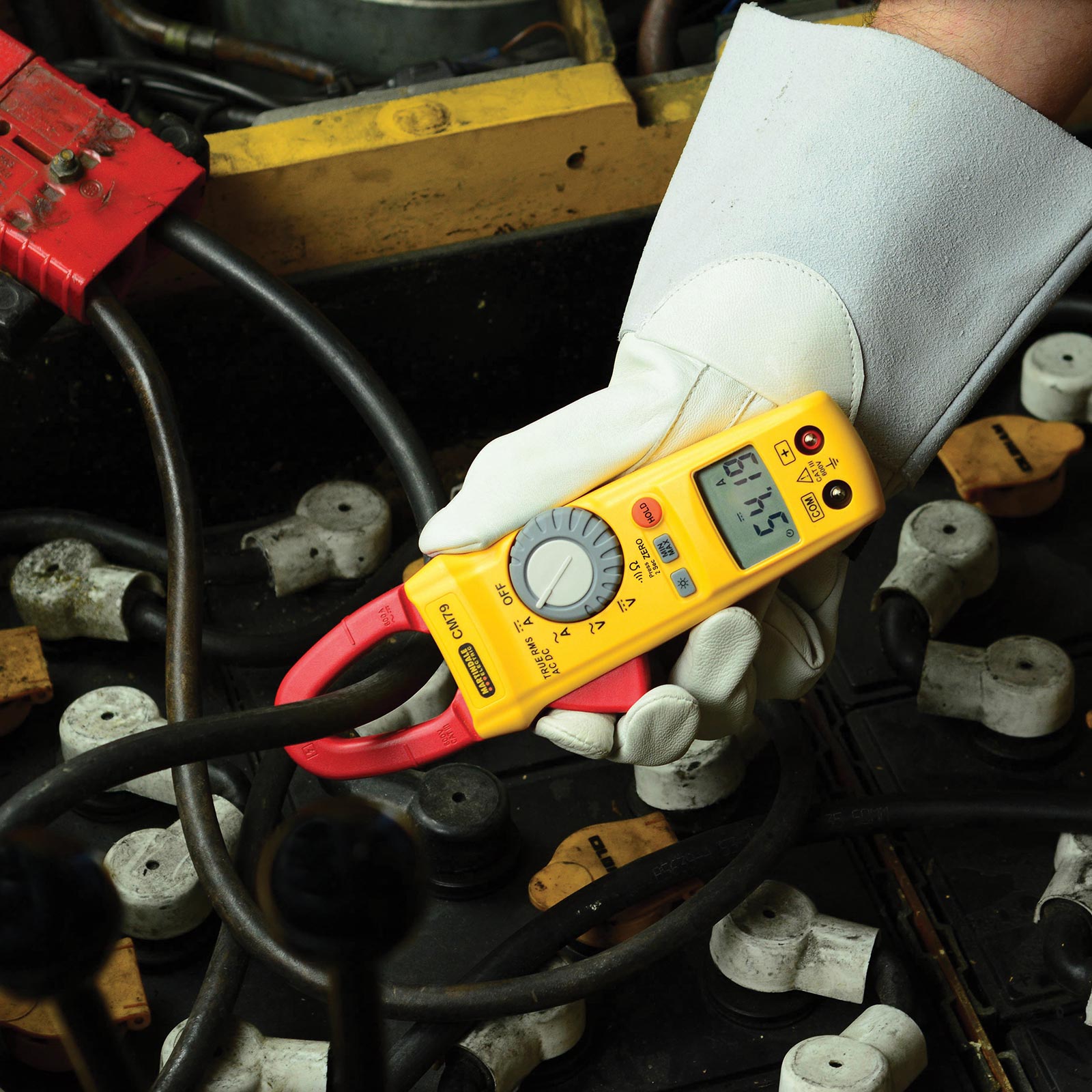
Multimeters introduce the potential for human error – making it too easy to select the wrong range. In addition, multimeters rely on battery power; if the batteries are flat then a false “dead” reading will be given on a live circuit. The position is similar with non-contact voltage detectors; whilst these are frequently used to detect live cables, they cannot reliably be used to prove dead or to confirm the safe isolation of a circuit.
Ensuring compliance with the right safe isolation equipment
It is now possible to ensure full compliance with the latest standards by using a fail-safe range of voltage indicators and proving devices that have been engineered specifically with safety in mind – and are easier to use than ever before.
We know how important it is to simplify the procedure for proving dead and to support the safe isolation procedure with equipment that is reliable, accurate and easy to deploy. When selecting a voltage detector, you can be assured of compliance with GS38 by ensuring that the unit you are purchasing complies with BS EN 61243-3, such as the VI13800 and VI15000 voltage indicators from Martindale Electric, which have been specifically designed to meet this regulation. Furthermore, they have been designed without batteries or switches which could lead to false indication. Dedicated purely to detect voltage, we have eliminated the potential for error from selecting the wrong setting, for example.
Benefits of complete safe isolation kits
For increased efficiency, we have also introduced complete safe isolation kits – bringing together all the necessary equipment to prove dead and lock out the circuit being worked on
Widely specified by contractors and maintenance teams, the kits include the GS38 industry standard voltage indicator, proving unit and locking off devices in a combination carry case – so that vital instruments cannot be inadvertently left behind. Easy to use, the kits ensure compliance with the latest regulations and legislation.
The risks of non-compliance and the importance of reliable solutions
Non-compliance presents unacceptable levels of risk in terms of human cost – as well as the potential for financial penalties that would be more than most organizations could bear. At Martindale Electric, we are committed to keeping you safe and driving down the level of preventable accidents that continue to take place. That’s why we work hard to make it simple for our customers to stay safe and stay compliant – regardless of size or budget – as we believe that everybody deserves the most reliable safe isolation solutions.
Key takeaways
- Live electrical work should be avoided wherever possible in line with HSE guidance
- Safe isolation procedures are essential to ensure circuits are fully de-energised before work begins
- A circuit cannot be assumed dead simply because it has been switched off or locked off
- Voltage indicators and proving units must be used together to eliminate uncertainty
- Known live sources are not a reliable method for proving voltage indicators
- Multimeters and non-contact voltage detectors are not suitable for proving dead
- Using equipment compliant with GS38 and BS EN 61243-3 supports safe and effective working practices
- Failure to follow correct procedures increases the risk of serious injury, fatality, and legal penalties
Find out more information on our Safe Isolation products.