


Choosing the right socket tester
How to choose the right socket tester for your application
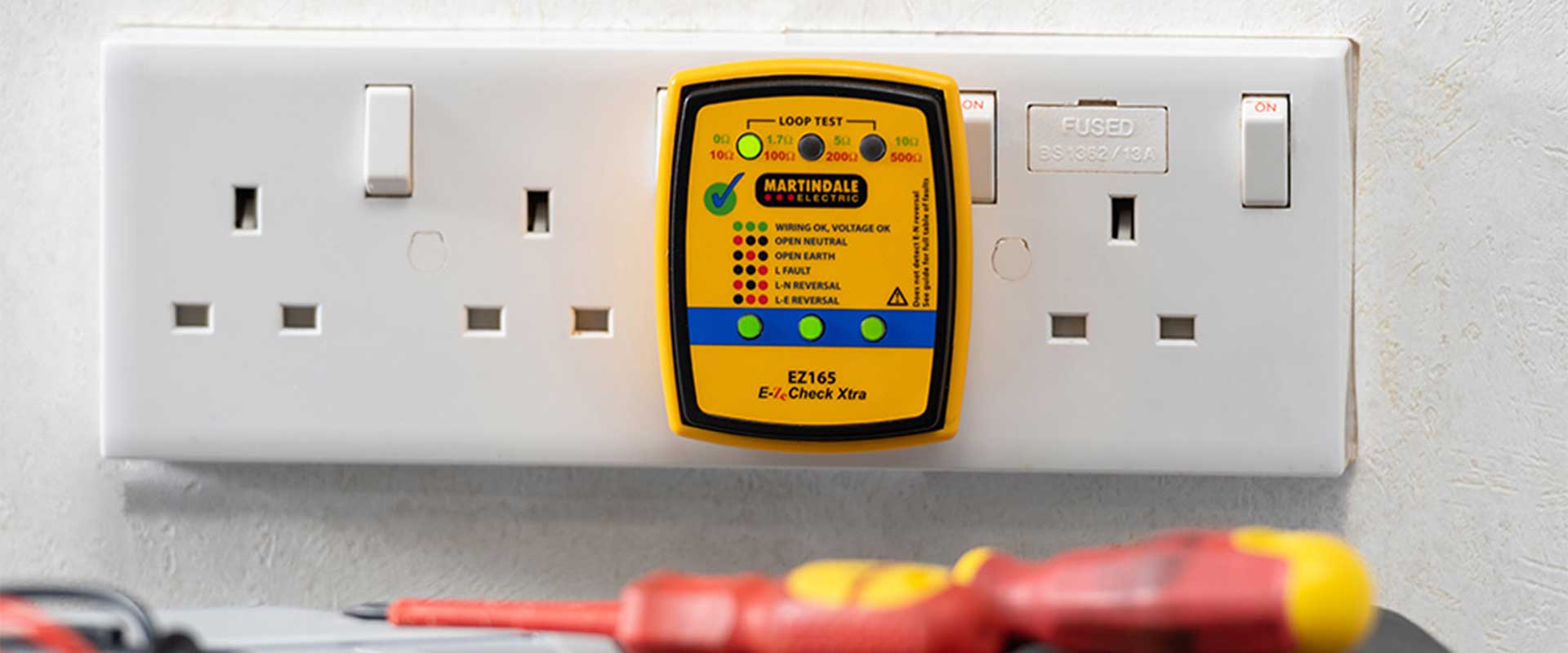
All socket testers check that the earth, live and neutral are the right way round (called polarity testing). Some offer added features – they may include a buzzer in addition to LEDs to indicate a good socket or they may show a combination of indicators to identify which particular fault type is present.
There is one fault that a socket tester and indeed no other piece of equipment can easily find – the swapping of the Earth and Neutral wires. This is because the earth and neutral are common at the substation, (if not closer), so electrically they are indistinguishable.
When selecting a socket tester it’s important to understand the different types available and their capabilities and limitations. Choosing the correct socket tester helps improve electrical safety, identify wiring faults and ensure the tester is suitable for the application.
Types of socket testers and their capabilities
There are various categories of socket testers, ranging from simple checking devices to more advanced devices with multiple functions. The key differentiator is in the ability to measure and indicate earth fault loop impedance.
| Simple (CP501,BZ101) | Advanced (EZ365) | |
| Capabilities | 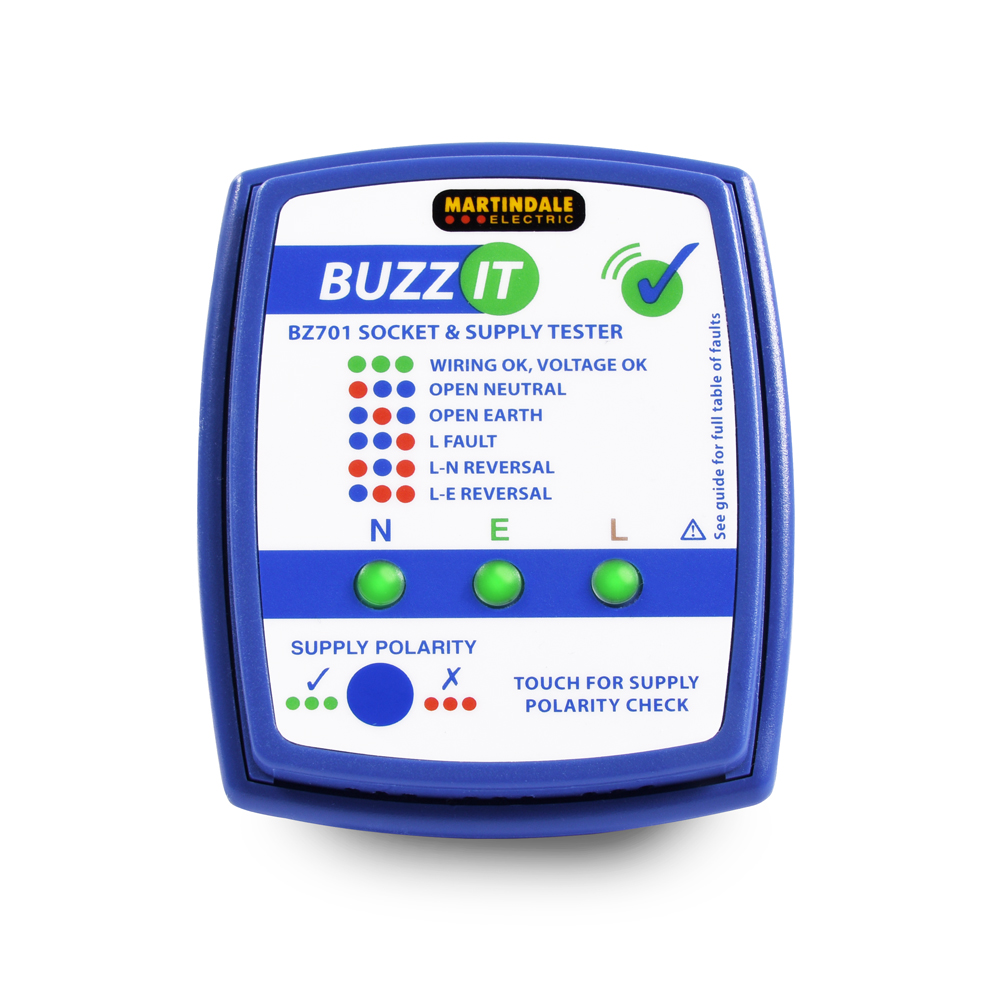 | 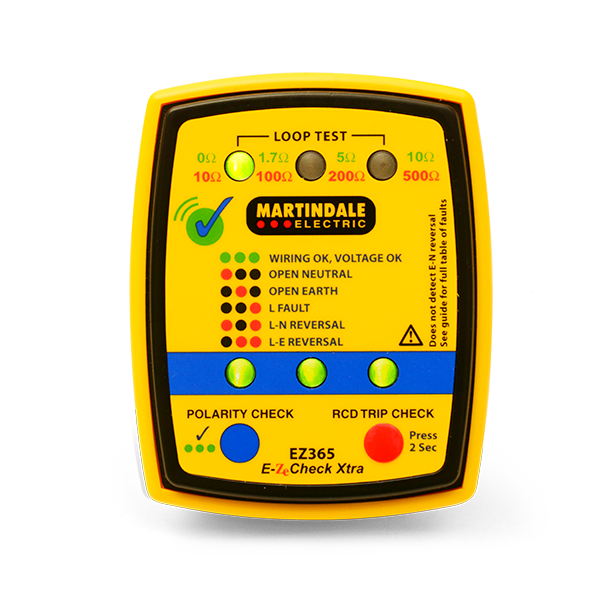 |
| Indicate functional socket | ✓ | ✓ |
| Detect line / neutral reversal | ✓ | ✓ |
| Detect presence of earth | ✓ | ✓ |
| Display range of earth loop impedance values | X | ✓ |
| Live Neutral supply swap | X | ✓ |
All socket testers will show the absence of an Earth; However more advanced testers such as the Martindale EZ365 will show you how good your earth is.
This differentiation is important as some simple socket testers on the market have been seen to show an earth as good even when the impedance is as high as 500kΩ. As 0.5MΩ (500 kΩ) is normally considered a good insulation level, it’s clear that in this case the “protective” earth will not protect.
Why earth loop impedance measurement matters
A reliable earth loop impedance measurement is important to ensure that the over current protection devices achieve a fast enough disconnection time to avoid electrocution. In the case of an earth fault, loop impedance values must be less than those specified in the BS7671 Wiring Regulations Amendment 3:2015. Earth loop values higher than a few ohms can cause problems with disconnection times and therefore socket testers capable of indicating earth loop impedance values in this range reveal a lot more about the electrical safety of the installation.
Choose the right socket tester with our selection tool
A helpful guide for electricians, maintenance professionals, and DIY users, Martindale’s socket tester selection tool provides clear guidance on the different Martindale models available, and their particular features This helps save time when choosing the right equipment, while also improving safety and accuracy by ensuring the tester is suited to the task.
18th Edition Testing and Verification
It’s important to appreciate that socket testers are not an alternative to the full verification of wiring installations. However, as a first line indicator to identify potentially unsafe installations and wiring faults, socket testers offer a fast and effective solution when properly specified. They can also be particularly useful as a service tool in identifying potentially unsafe conditions prior to carrying out work on existing installations and appliances. For more information on the use of socket testers including their benefits and limitations, see our application notes.
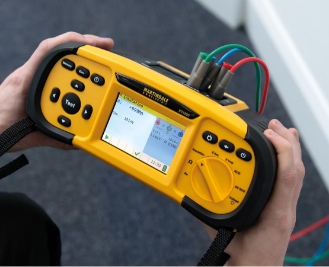
For information on professional loop testers and multifunction testers suitable for carrying out all the tests needed to verify the safety of domestic, commercial and industrial wiring installations according to the18th Edition Wiring Regulations, see our Multifunction Installation Testers.
Key takeaways: socket tester selection and safety
Choosing the right socket tester depends on understanding the level of testing required and the capabilities of each type of tester. While basic socket testers can quickly identify common wiring faults, more advanced models with earth loop impedance measurement provide greater insight into the condition of an electrical installation.
Socket testers are a useful first-line diagnostic tool, but they are not a replacement for full electrical installation verification. Selecting a tester suited to the application helps users work safely and make more informed decisions when identifying potential issues.