




Create a Safe Isolation Process That’s Fail-Safe
Overview of safe isolation and safer electrical working
Proving dead effectively and safely is vital when it comes to safe isolation and the safeguarding of people and assets. By introducing a robust safe isolation procedure, compliance with the latest standards is assured, helping to reduce the number of electricity-related injuries and fatalities within the workplace, whilst also avoiding significant financial penalties and consequential losses.
Proving dead sounds relatively simple, but establishing real confidence around the procedure and understanding exactly how to prove dead starts with the creation of a more rigorous electrical safety process and the introduction of safer working practices. Isolation, locking off, labelling and proving dead are all critical components of the overall safe isolation process. Choosing the right equipment to support that process is key.
Why a fail-safe safe isolation process matters
By creating a complete safety system, as well as ensuring a high level of training and ensuring that a proving unit and lock off kits are always available and used margin for error is reduced and points of failure are minimised.
With over 95 years of experience in electrical safety, Martindale Electric is one of the most trusted names in the industry, delivering test, measurement and safe isolation solutions to ensure that circuits have been de-energised and properly isolated before maintenance and modifications.
Identify the point of isolation, lockout and tagout
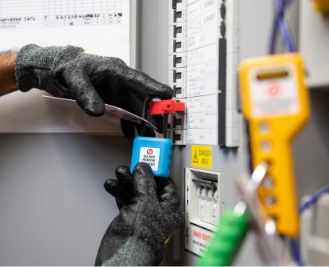
Firstly, has permission for safe isolation been obtained? If so, identify the point of isolation, lock it off and place warning tags onto the equipment.
Lock off kits are available to ensure that the right locking-off device is always to hand. A basic lock-off kit should include a selection of MCB and breaker locks, a padlock with a unique key, a hasp if more than one person is working on a system as well as lock-out tags and warning labels. If an accident were to occur, it’s not enough to say that you didn’t have the right device for the breaker because you could isolate the board. If you are able to turn equipment off but can’t isolate it at the point of connection, trace the supply back to a point where it can be safely locked off.
Lockout and Tagout Systems
Lockout and tagout systems are essential safety tools for anyone working on or near circuits or equipment. Lock-off devices are a sensible option for lone workers but are especially important where several people are working. Then each worker can be allocated their own padlock with its individual, unique key to ensure their safety.
There is no point in proving dead if someone else comes along and restores power without your knowledge. This can be lethal if an engineer is working on a circuit that is suddenly energised. It is not only electrical technicians who are vulnerable, however, as a worker cleaning a piece of industrial equipment that suddenly becomes live or starts to operate would also be at risk.
A major problem encountered when working on existing sites is the lack of comprehensive circuit labelling. Even in cases where circuits appear to be properly labelled, alterations are often made by unqualified or untrained staff. Even if the changes are safe, the labelling may frequently be incorrect.
Select a dedicated GS38 compliant voltage indicator – and prove that it’s working
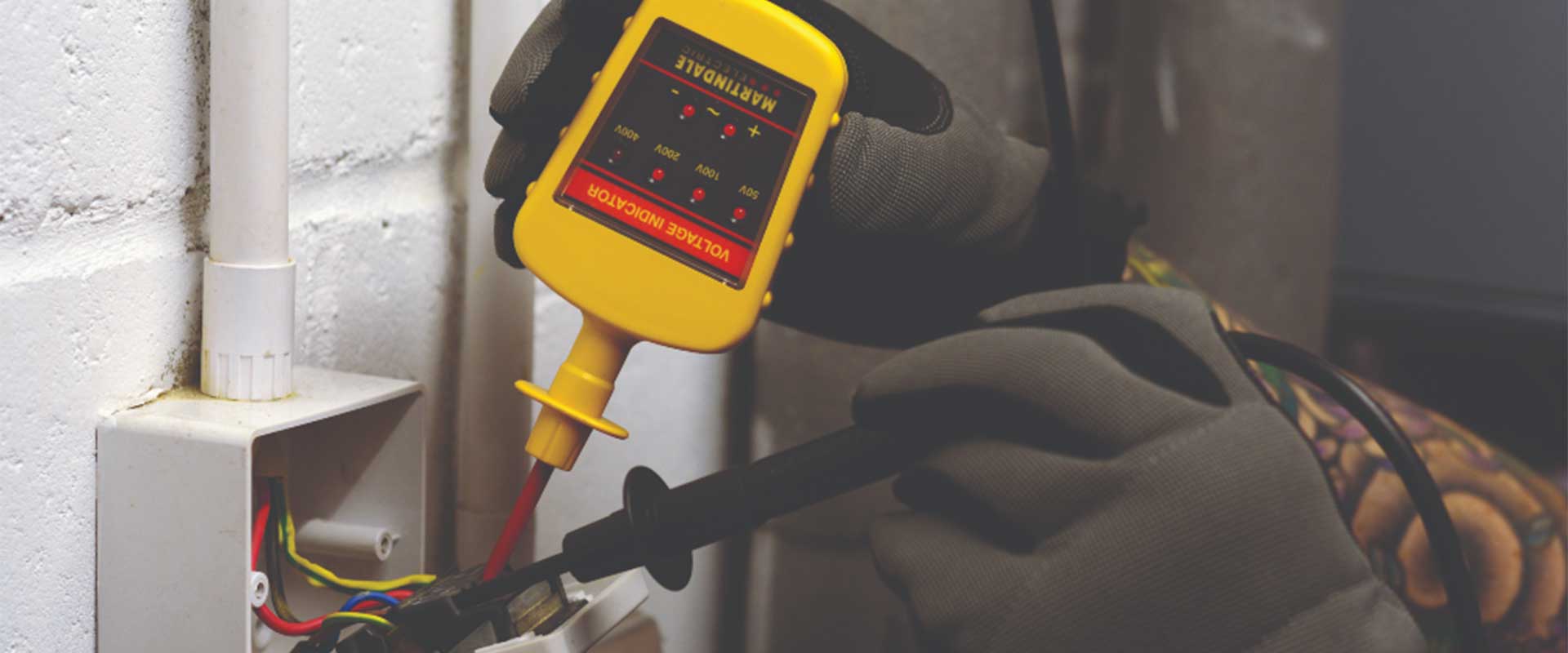
When choosing the right voltage indicator (VI) for a particular application whether, for residential projects, commercial or industrial facilities reliability is key. The best models are available without batteries, ranges, or switches making them incredibly user-friendly and reducing the opportunity for error. When it comes to buying a voltage detector, how can you be sure of compliance with the Health and Safety Executive Guidance Note GS38. It’s simple.
Always ensure that the unit you are purchasing complies with BS EN 61243-3, such as the VI13800 voltage indicator from Martindale Electric, which has been specifically designed to meet this regulation. When choosing the right VI, one of the main factors that set many units apart is a 1000V CAT IV safety rating following BS EN61010, as referenced in BS EN 61243. It is this safety
Rating, which ensures the product can cope with the risks from hazardous transient impulses on the mains supply system, which makes indicators such as the Martindale VI15000 and MTL15 suitable for supply-side LV applications in all installation categories as defined in the standard. That means that wherever you are working, you can be confident in having a voltage indicator that is properly rated for the application. BS EN61010-1 Installation Categories (CAT ratings) are based on where you are working.
Test for dangerous voltages – and test again
The next step is to test for dangerous voltages on any circuit conductor to be worked on, whether single or three-phase. It is recommended to use a dedicated proving unit matched to the VI to fully test that all LEDs on all ranges are working. A proving unit is safer than the mains and provides a live source wherever you are working.
Test the V1 on the proving unit; if all OK proceed to the test circuit.
If there is no voltage detected and the circuit is dead, then the operator should proceed to re-test the VI using the proving unit. If it’s working correctly, then the operator has proved dead and the system is safe to commence work. It is now possible to ensure full compliance with the latest standards by combining the correct tools for the job with clear and transparent processes.
It’s easier than ever to stay safe and compliant
For increased efficiency, Martindale Electric has range of industry specific complete safe isolation kits bringing together all the necessary equipment to prove dead and lockout the circuit being worked on. Widely specified by contractors and maintenance teams, the kits include the industry standard GS38 voltage indicator, proving unit, and locking off devices in a combination carry case so that the vital proving unit cannot be inadvertently left behind. Easy to use, with no need to take the proving unit out of the case, the kits ensure compliance with the latest regulations and legislation.
ALIVE – Martindale’s memorable Safe Isolation Process
ALIVE is Martindale’s easy-to-remember safe isolation process designed to help lower the risk of electricity-related injuries and workplace fatalities.
We developed ALIVE to highlight the five critical steps that should always be part of a safe isolation procedure – steps that are vital for keeping you and your team protected from serious harm or loss of life.
A – Approved kit
Before starting, make sure your equipment meets all legal safety standards.
L – Lockout, tagout (LOTO)
Identify the point of isolation – lock it off and place warning tags onto the equipment.
I – Initial prove
Test your VI against the proving unit to make sure it is working correctly.
V – Voltage test
Use your VI to check for dangerous voltage levels.
E – Ensure
Prove the VI against the proving unit again before starting to work on the circuit.
Learn more by visiting our Safe Isolation Campaign Resources
Key Takeaways
- Safe isolation procedures help reduce electrical injury and fatality risks in the workplace by combining isolation, locking, tagging, and proving processes.
- Identifying and securing the correct point of isolation is essential to prevent accidental re-energisation of circuits.
- Using GS38 compliant voltage indicators and proving units helps ensure regulatory compliance and reliable testing.
- The ALIVE framework summarises the five-step safe isolation method: Approved kit, Lock out/tag out, Initial prove, Voltage test, and final Ensure check.