




Staying alert to stay alive – a safer safe isolation process
The safe isolation process and why it matters
To safeguard workers and reduce potential liability, electrical engineers must ensure circuits have been de-energised and properly isolated prior to any design, development and maintenance work, explains Steve Dunning, Managing Director of Martindale Electric.
Safe isolation is a vital task which needs to be performed whenever working on an electrical installation. It ensures both the safety of those working on the installation, and other tradespeople or members of the public who might be on the premises. It is important that the person who performs the isolation is trained, qualified, and up to date on the procedures necessary to perform this task. Appropriate equipment is also essential – both testing kit and lockout devices.
Regulatory requirements and industry guidance
Electrical Safety First, the UK charity working across the electrical industry reports that injuries caused by electrical accidents are still prevalent, highlighting just how important safe isolation procedures are on site. The Electricity at Work Regulations (EAWR) 1989 and The Management of Health and Safety Regulations at Work Regulations 1999 stipulate the steps those managing electrical work must take to ensure a safe working environment.
Before carrying out any work on a circuit, contractors should use a dedicated voltage indicator (VI) and proving unit when proving dead.
The EAWR require those engaged in electrical work to be competent to prevent danger or injury, or to be under the supervision of someone who is (Regulation 16), and to take adequate precautions to prevent electrical equipment that has been made dead from becoming electrically charged while work is being carried out (Regulation 13).
They also forbid work on or near a live conductor unless it has been insulated, or it is unreasonable for it to be made dead (Regulation 14).
The Management of Health and Safety Regulations at Work further stipulates that employers must carry out risk assessments prior to such electrical work being done.
Staying ALIVE – following the correct safe isolation process
Safe isolation and then proving dead sounds like it should be relatively simple. But establishing real confidence around the procedure, so that those carrying out work can do so without fear of harm, requires a rigorous approach to the electrical safety process. Isolation, locking off, proving dead, and labelling must be performed in a systematic and methodical manner.
We need to acknowledge that, in terms of the safety of individuals, there is a difference between the activities that should take place prior to working, such as gaining permission and permits, and the activities that are absolutely critical in preventing accidents and fatalities. For instance, a risk assessment is an important element of any job, but that in itself will not keep you alive. The same is true for activities that take place after working on an electrical system, such as safe re-testing and start-up.
Nothing is more important than preventing injuries and protecting lives. Martindale, to ensure the critical steps are memorable, has created “A.L.I.V.E”. A.L.I.V.E shines a spotlight on the five vital stages that must be carried out for your own protection and to prevent loss of life.
A.L.I.V.E: 5 fail-proof steps to safe isolation
A – Approved Kit -Before starting, make sure your equipment meets all legal safety standards (for voltage indicators that is BS EN 61243-3).
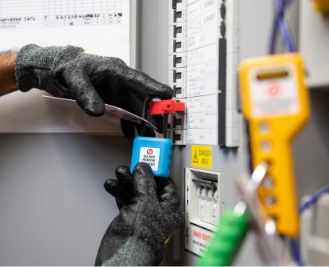
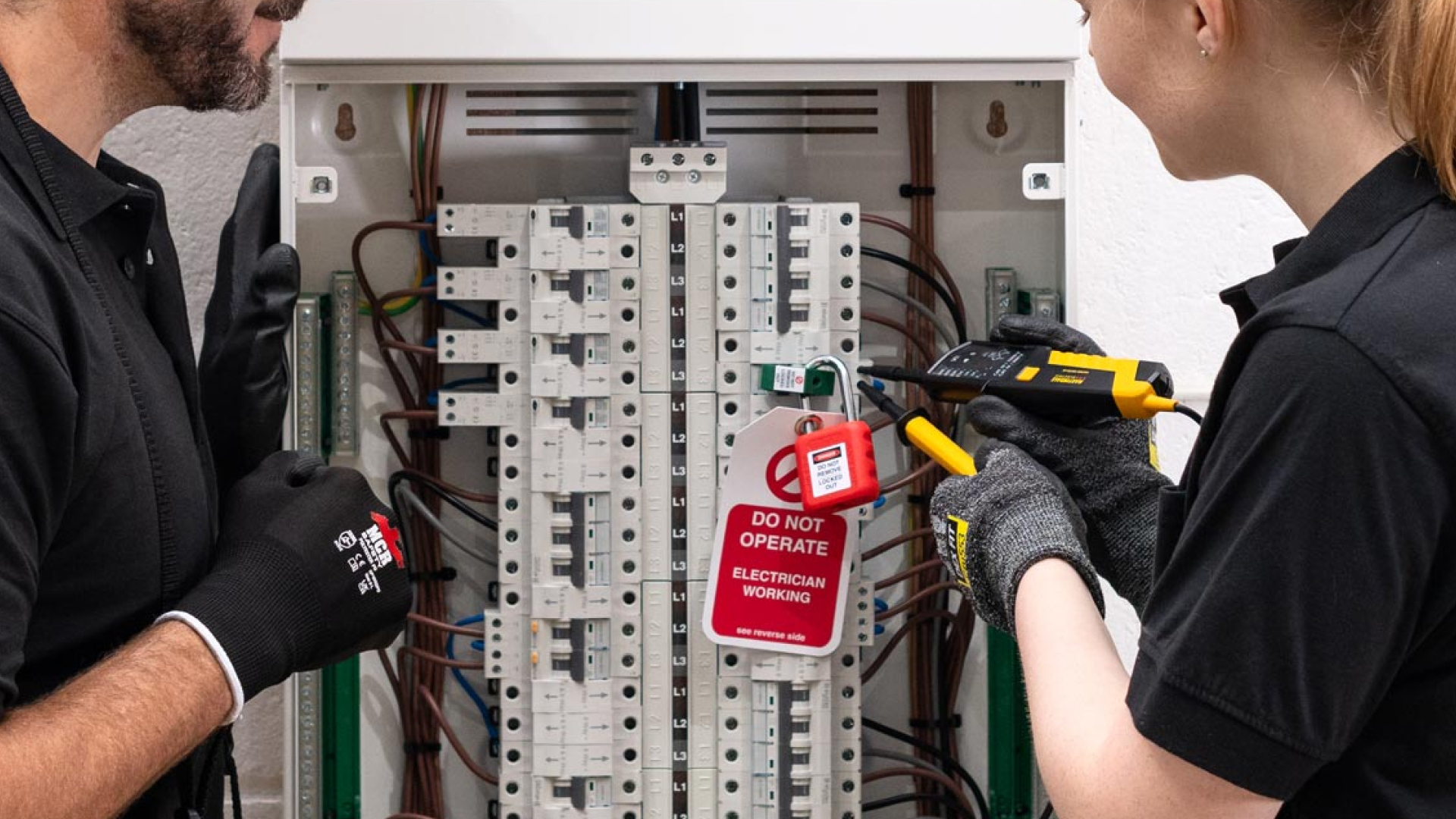
L – Lockout – Identify the point of isolation, lock it off, and place warning tags onto the equipment.
I – Initial Prove – Test your Voltage Indicator against the proving unit to make sure it’s working properly.
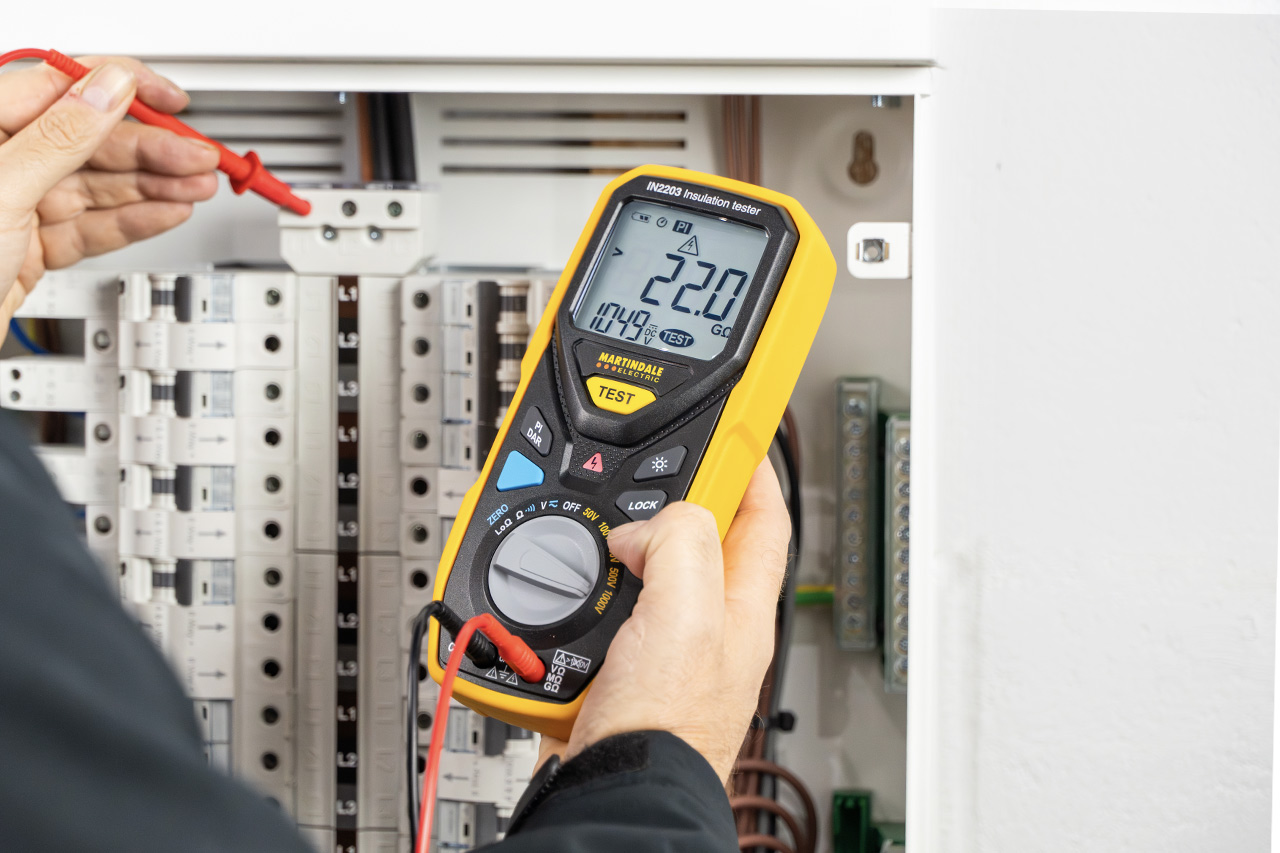
V – Voltage Test – Use your Voltage Indicator to confirm there are no dangerous voltages in the circuit you are about to work on.
E – Ensure – Prove the Voltage Indicator against the proving unit again to ensure no damage or fault has occurred before you start working on the circuit.
How to prepare for safe isolation
It’s important to choose the right equipment, and a proving unit and lockout kits should always be available. The point of isolation should be identified – it should be locked off and warning tags placed on all the equipment. A lock off kit should include, at a minimum, a selection of MCB and breaker locks, a padlock with a unique key, a hasp if more than one person is working on a system, and lockout tags and warning labels.
If equipment can be turned off but not isolated, then the person responsible should isolate at the point of connection and then trace the supply back to a point where it can be locked off. Each worker should have their own padlock with a unique key. This is because if equipment is proven dead only for someone else to restore power, the hazard has returned.
An important point to remember when working on existing sites is that labelling can be misleading. Unqualified or untrained staff could have made alterations. And even where changes are safe, the labelling might be incorrect.
Check your voltage indicators
Choosing the correct voltage indicator (VI) is another point to consider. The best VI models use no batteries and have no ranges or switches, which makes them very user-friendly and reduces the chances of error. The unit should comply with BS EN 61243-3 and be specifically designed to meet this regulation.
Another thing to look out for is whether the units have an appropriate category (CAT) and voltage safety rating following BS EN 61010, as suggested by BS EN 61243. This safety rating tells you that the unit can cope with the risks from hazardous transient impulses on the mains supply system. BS EN 61010-1 Installation Categories (CAT ratings) are based on where you are working:
- Measurement Category I refers to measurements performed on circuits not directly connected to the mains supply, or specially protected secondary circuits such as those powered by regulated low-voltage sources.
- Measurement Category II refers to measurements performed on circuits directly connected to a low-voltage mains installation and might include standard 13A socket outlets, household appliances, portable tools and equipment.
- Measurement Category III refers to measurements performed within a building’s permanent installation: distribution wiring including mains bus, feeders and branch circuits or hard-wired loads.
- Measurement Category IV refers to the supply side source of the building’s installation – for measurements performed at the source of the low-voltage installation such as electricity meters and measurements on primary overcurrent protection devices and ripple control units. It also includes devices and locations between the supply side of the building and the source, typically a substation.
Prove it – use a dedicated, matching proving unit
Testing for dangerous voltages on any circuit conductor, whether single or three-phase, is the next step. The best way to do this is to use a dedicated proving unit matched to the VI to fully test all LEDs on all ranges are working. This is a much safer method than using the mains and provides a live source wherever you are working.
If no voltage is detected and the circuit is dead, then the VI should be re-tested using the proving unit. If it’s working correctly, then the operator has proved dead. The system is now safe to begin work on.
By incorporating a proving device into an electrical safety process, that process becomes inherently more robust and reliable. Although a relatively straightforward addition, when working with or near electrical systems and equipment, a proving device can significantly reduce the risk of electrical injury to you, your team, and others around you.
Key takeaways
- Safe isolation is essential to ensure circuits are safely de-energised before electrical work begins
- Proper isolation protects workers, other tradespeople, and members of the public
- Competence, training, and correct equipment are all required to perform safe isolation correctly
- UK regulations such as EAWR 1989 and the Management of Health and Safety Regulations 1999 set legal expectations for safe systems of work
- Voltage indicators and proving units must be used to confirm circuits are dead before work begins
- Safe isolation must be carried out in a structured, systematic way: isolation, locking off, proving dead, and labelling
- The A.L.I.V.E system highlights five critical safety steps: Approved Kit, Lockout, Initial Prove, Voltage Test, Ensure
- Correct selection and use of voltage indicators (including CAT ratings and compliance standards) is essential
- Proving units provide a safer and more reliable method than using mains sources for testing equipment