


How to choose the right multimeter
A Digital Multimeter is one of the most useful and essential tools for anyone working with electrical or electronic equipment. Whether you are a beginner, hobbyist, technician, electrician, or engineer, choosing the right multimeter can make testing safer, easier, and more accurate.
From a start point of a simple digital version of the old analogue meter measuring volts and amps, today’s multimeters offer a wide range of measurement functions within a single instrument. Choosing the right product for your application can be daunting with so many models available. It can be difficult to know which features actually matter. Not every application requires the same type of multimeter, so how the instrument will be used and what it will be used for needs to be carefully considered before making a purchase.
What are multimeters used for?
Digital multimeters are essential instruments used across manufacturing, industrial maintenance, electronics engineering, facilities management, education, and research. During product development, engineers use them to validate circuit performance and troubleshoot prototypes. Within manufacturing environments, they facilitate production testing, quality assurance, while maintenance personnel employ them to diagnose electrical faults, evaluate power supplies, assess motors, and verify wiring integrity. The portability enables field engineers to perform precise measurements at customer locations, minimising downtime and accelerating equipment repairs.
Digital multimeter functions
All multimeters will measure basic electrical parameters AC & DC voltage, in most cases AC & DC current, resistance and continuity. A wide-range of additional measurements can include capacitance, frequency, temperature and diode test with other functions such as datalogging, min/max recording and duty cycle also possible. Most modern multimeters are auto ranging, making them simple to operate, enabling use without range selection.
The first stage in selecting a suitable model is identifying what needs to be measured now and potentially in the future.
Multimeter safety – CAT rating and voltage
BS EN61010-1 is the safety standard governing electrical equipment used for measurement, control, and laboratory applications. All multimeters are subject to this and will have safety information located on or near the measurement connection. This comprises of a category or CAT rating plus a voltage.
The CAT rating defines the risks from hazardous transient impulses and potentially lethal short circuit currents on the mains supply system based on where you are working. To stay safe the multimeter should be rated the same as, or higher, than the location where it is being used.
Briefly: –
- CAT II: Socket outlets and similar points of the mains installation. Examples – Electrical appliances, plug in lamps, socket outlets.
- CAT III: The distribution part of the building’s mains installation. Examples – Socket wiring, circuit breakers, lighting
- CAT IV: The supply side source of the building’s mains installation. Examples -Tariff Meter, service fuse
In addition to the category rating, the multimeter will also have a voltage rating to show the maximum safe phase-to-earth system voltage, normally 50V, 100V, 150V, 300V, 600V or 1000V.
It is essential that both category and voltage rating are used to define where the multimeter can be safely used.
True RMS or not True RMS?
There are two methods used by multimeters to measure AC waveforms: – Average Responding or True RMS.
Average responding. An average-responding meter utilises averaging mathematical formulas to calculate the measured values. The formulas, however, are based on the measurement of a pure sign wave. An average responding meter can measure non-sinusoidal voltage or current, but the result will have uncertain accuracy, likely to be significantly affected when measuring a distorted waveform.
True RMS. True RMS essentially calculates the equivalent DC value of an AC waveform, it determines the effective, or DC heating value, of any AC wave shape. A true RMS meter can accurately measure both pure sign waves and the more complex non-sinusoidal waves.
The need to accurately measure distorted waveforms has grown significantly, from variable speed drives through to computer equipment, the current drawn can be far from sinusoidal. True RMS multimeters are now widely used to ensure accuracy regardless of the wave shape of the measured AC voltage or current.
Accuracy, Digits and Resolution
As with multimeter functions, the accuracy required should be matched to the maximum requirements of the potential work to be undertaken. For example, the required accuracy of a meter being used for general electrical work may significantly differ from troubleshooting control signals in a manufacturing process. The higher the accuracy and resolution, generally the higher the cost of the meter.
Digits and resolution determine how precisely an instrument can measure and display electrical values. In general, the greater the number of digits, the higher the resolution. This is because additional digits allow the multimeter to detect smaller variations in a given signal.
For example the common 3½ digit multimeter could display readings up to ±2,000 counts so +/- 1999 while a 4½ digit multimeter provides more resolution at ±20,000 counts +/- 19999.
In conclusion
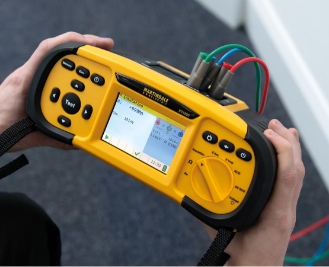
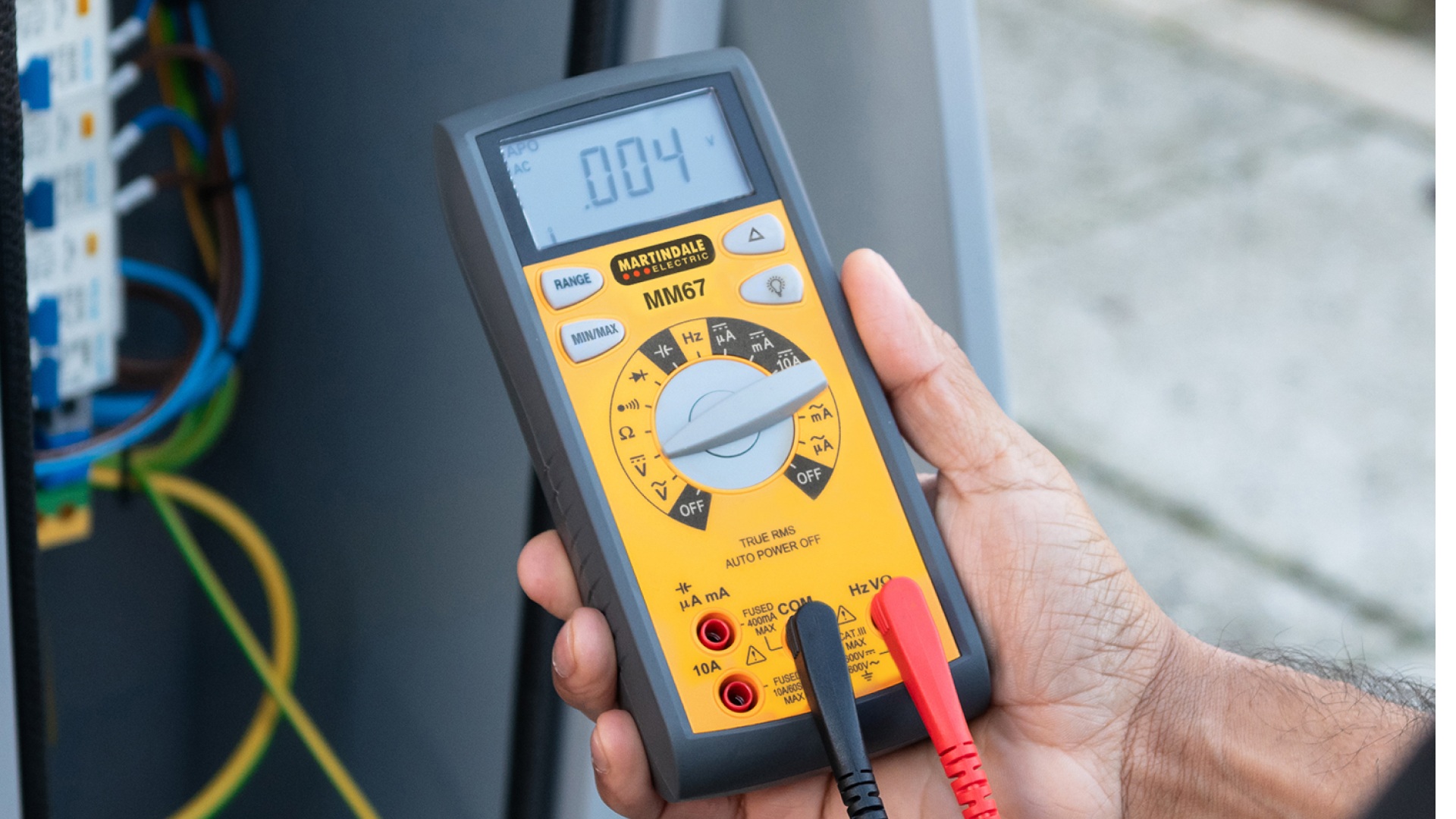
Martindale offers a variety of multimeters to meet the needs of your electrical testing applications; all feature a large rotary switch for easy selection of the required test. The latest addition to the Martindale range is the MM67 an auto-ranging, True RMS, digital multimeter that measures AC / DC voltages up to 600V and currents to 10A and expands the range offering a True RMS fully functioned multimeter at an affordable price.
Choosing a digital multimeter is ultimately about matching the instrument to the work you expect to perform. Pay particular attention to measurement functions, accuracy, resolution, safety ratings, build quality, and ease of use. Features such as auto-ranging, True RMS, backlighting, and data logging can add convenience, but safety and reliability should always come first. By considering these factors before buying, you can choose a multimeter that provides dependable measurements and remains useful for years.
Explore Martindale’s range of digital mulitmeters and supporting accessories