




Knowing and applying safe isolation procedures: what is preventing consistent application?
Safe isolation is a fundamental part of working safely with electricity. But how consistently is the Safe Isolation Procedure actually being followed in practice?
Martindale Electric’s 2026 Electrical Safety in the Workplace Survey explored the experiences of electrical professionals across the UK, including their awareness of electrical safety procedures and how these are applied in the workplace. The research also provided a valuable opportunity to hear directly from electrical professionals working on the ground, with respondents sharing their experiences and views on the challenges they face when applying safe working practices.
More than 86% of respondents said they were very familiar with the safe isolation procedure, and the same percentage stated they were either ‘extremely’ or ‘very’ confident that they knew every step. However, concerningly, only 55% said they always follow the procedure in full before starting work, highlighting a potential gap between knowledge and application.
A gap between safe isolation knowledge and application?
With 86% of electrical professionals aware of the procedure but in practice only 55% always using safe isolation every time, it is important to explore what factors may prevent this essential safety process from being followed.
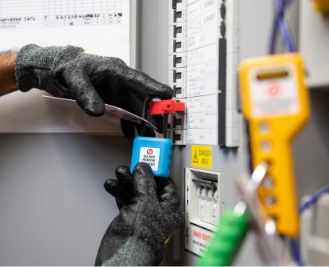
In addition, the findings showed only 42% of respondents said they always carry out Lockout Tagout (LOTO) before starting work. As an important part of the Safe Isolation Procedure, this provides further evidence of the difference between recognising the importance of safe isolation and consistently applying the full process.
“It is positive to see that almost every respondent to our research recognises the Safe Isolation Procedure but recognising it and following it fully every single time are clearly two different things. We really want to encourage everyone working around electricity to maintain their awareness of electrical safety procedures and use the resources available to keep their knowledge up to date on the latest safety practices and guidance.” Steve Dunning, Managing Director, Martindale Electric.
The survey comments provide further insight into some of the factors that may contribute to this gap.
What can prevent safe isolation procedures being followed?
Hundreds of comments were provided by respondents as part of the research. Four clear themes emerged around the practical challenges associated with consistently following safe isolation procedures.
1. Time and client pressure
Time pressures were highlighted by respondents as one factor that can affect safe working practices. Some comments referred to expectations to complete work quickly, minimise disruption or, from clients, to keep circuits energised while work is being carried out. These comments indicate that commercial and client pressures can be a factor when it comes to applying safe working procedures consistently.
Survey respondents:
“Less time pressure for workers so safer procedures can be followed.”
“Pricing jobs correctly which includes the time required to implement the necessary safety measures.”
“Time pressures, and pressures from consumers/staff saying they can’t be without electric.”
“Less time pressure on electricians, allowing time for correct procedures to be followed.”
“Greater time to complete jobs. You rush you risk your life.”
2. Overconfidence and complacency
Confidence that a circuit is dead was another factor identified in the research. 46% of respondents cited confidence that the circuit was dead as a reason why the full Safe Isolation Procedure may not always be followed. Respondents also referred to situations where people may assume that a circuit is dead, believe they are in control of the environment or feel that the full process is not necessary every time.
These findings highlight the importance of not allowing familiarity with electrical systems to replace safety processes
Survey respondents:
“In my opinion, assuming the electrician is properly trained over confidence and rushing the job causes can lead to accidents.”
“In my experience it is primarily down to confidence that a circuit is dead and will remain dead whilst work is carried out, contributing to the full safe isolation procedure not being followed. This over confidence is the primary cause of electrical incidences or near misses.”
“Over confidence in under trained and inexperienced worker’s is the key cause.”
“You may be lucky the first few times but at some point you’ll get a shock either because you didn’t LOTO and a customer has energised a circuit or because you failed to check it was not live.”
“Greater awareness for Electrical Safety, still too many are being blasé and not using the full LOTO kit, even when it has been issued free to them and full instructions given to them”
3. Operational constraints
Respondents also highlighted a number of practical and operational challenges including other trades needing access to power, essential systems that cannot easily be interrupted, difficulties with circuit identification and fault-finding requirements.
These comments demonstrate that electrical professionals can encounter situations where applying safe isolation procedures presents practical challenges within the working environment.
Survey Respondents:
“Awareness, on a multi-occupied site there are too many people that just go on doing the things their used to – not aware that every action can have consequences.”
“Generally, attitudes of ‘I know what i’m doing’ are fine, until others are involved in works on the same systems and adopt differing practices.”
“Management need a better understanding of working safely and not to pressure men to go live with systems when a system is not fully complete.”
4. Equipment, training and support
The availability of appropriate equipment, training and workplace support was another theme identified in the survey responses. This highlighted the need for readily available lock-off and testing equipment, refresher training, sufficient time, and support from employers and clients.
Survey Respondents:
“Training to improve attitudes… Also better financial support of safety testing equipment and electrical PPE (arc and voltage safe).”
“Regular staff training and asking staff to demonstrate how to safe isolate on a rig/training room at the office, and regular checks that they have the correct test and proving kits and kept in good condition.”
“Employers willing to pay to keep training up to date.”
“More support for a newly qualified electrician once completed apprenticeship.”
Electrical safety in the workplace – we all have a part to play
The findings from the Martindale Electrical Safety in the Workplace Survey 2026 highlight an important distinction between knowing the safe isolation procedure and consistently applying it. The research found high levels of awareness and confidence in the process, but worryingly only 55% of respondents said they always follow the full procedure before starting work.
Improving the consistent application of safe isolation is not simply about awareness of the procedure itself. The research identified that electrical safety does not sit solely with the individual carrying out the work. Employers, clients and the wider industry all have a part to play in creating an environment where safe working practices are understood, supported and followed. This includes appropriate equipment and training, allowing sufficient time to work safely, and ensure that working practices align with the requirements of relevant electrical safety legislation and guidance.
Supporting safe isolation in practice
For organisations looking to review their approach to safe isolation, ensuring that the key elements of the procedure are understood and supported can be an important part of maintaining safe working practices. There are a number of safety organisations such as Electrical Safety First and Electrical Safety Roundtable that provide helpful guides and resources to support electrical professionals, apprentices and companies in ensuring best practice when working with electricity.
Martindale too have developed a range of resources to help electrical professionals strengthen their knowledge and understanding of the safe isolation procedure, including videos, safety campaigns, technical articles, step-by-step guides and links to key industry references. The Martindale Safe Isolation Procedure Compliance Checklist, covers key areas of the process and is an extremely useful support document.
Further information about the wider research findings, including electrical incidents, near misses and reporting, can be found in the Martindale Electrical Safety in the Workplace Survey 20261
1 About the Research
The Martindale Electrical Safety in the Workplace Survey 2026 was conducted between June and July 2026 to gather original insight from professionals who work with or around electricity. The research aimed to better understand real-world experiences of electrical safety, including electrical incidents, near misses, incident reporting, safe isolation practices, and experiences of unexpectedly live metalwork, with the goal of identifying opportunities to improve electrical safety across the industry.
Martindale Electric invited more than 100,000 electrical professionals to participate in the survey, including electricians, electrical contractors, electrical installers, facilities and maintenance professionals, health and safety practitioners, students and apprentices.
A total of 475 completed responses were received and analysed. The findings provide a snapshot of current attitudes, behaviours and experiences relating to electrical safety in UK workplaces and highlight opportunities to improve electrical safety across the industry.
The research was designed and conducted by Martindale Electric and represents original industry research into electrical safety practices and experiences in UK workplaces