




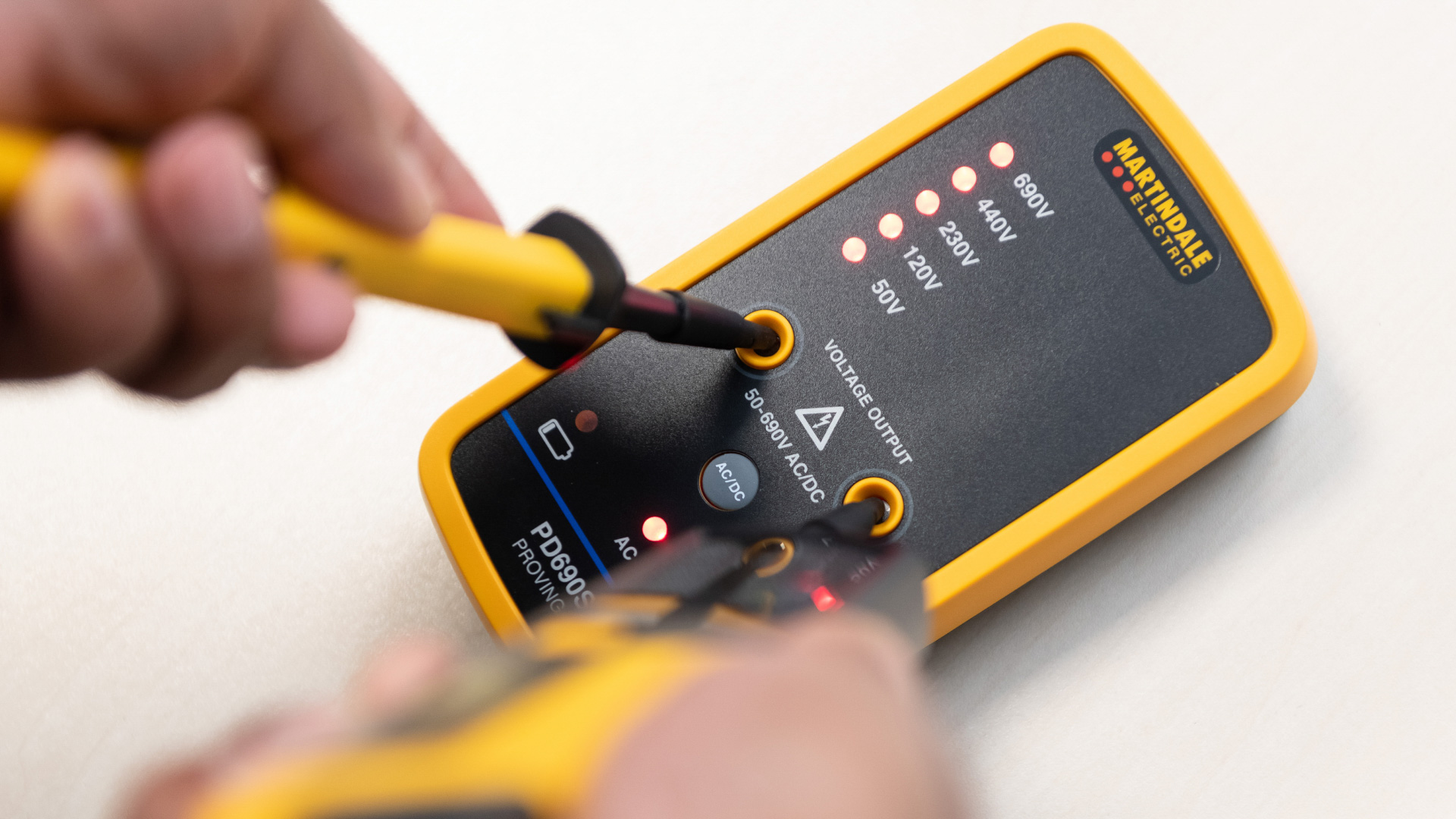
Advanced Proving Units – designed for safer working
Reports show that injuries from electrical accidents in the workplace are still prevalent, with true figures likely higher than statistics suggest due to potential under-reporting. Because electricity can be an unseen danger, a proper safe isolation procedure is essential for anyone working near electrical systems.
Effective isolation prevents accidental contact with live parts, protecting both workers and anyone else nearby, by ensuring all relevant circuits and equipment are fully de-energised before work begins. Correct safe isolation procedures are critical to ensure the protection of you, your teams, and others.
Electricity at Work Regulations
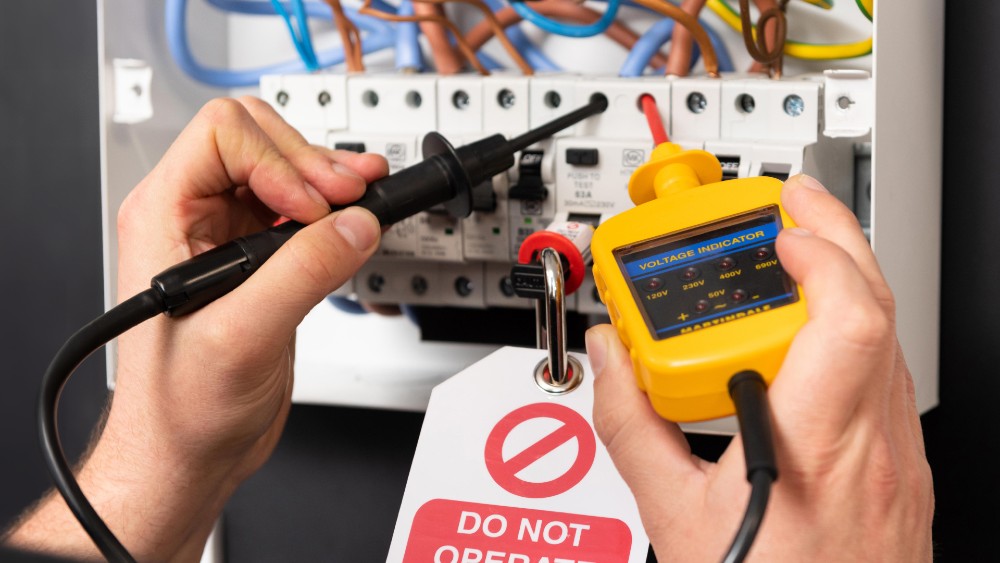
The Electricity at Work Regulations (EAWR) state: “Where work is to be done on or near conductors that have been isolated, the conductors must be proved dead at the point of work before the task starts. Where a test instrument or voltage indicator is used for this purpose, this should itself be proved, preferably immediately before and immediately after testing the conductor”.
The established procedure for proving dead is therefore to take the voltage indicator or tester being used to prove dead, check it against a known source, then test the circuit, and then test the voltage indicator against the known source again to prove the tester has not failed during testing.
Live Source or Proving Unit?
Whilst it is possible to use a known live source to test a voltage indicator, a much safer method is to use a dedicated proving unit matched to the indicator being used. The reasons for this are twofold. Firstly, there may not be a suitable known source available at the point where the work is being undertaken, which could potentially encourage shortcuts to be made on safety. Secondly, a live source may only light some of the LEDs on a voltage indicator, whereas a proving unit will ensure that all LEDs on all ranges are working, safeguarding against incorrect readings due to a fault.
Growing need for DC
Additionally, electrical workers are encountering more and more DC systems, particularly when working within renewable industries, solar installations, battery systems, and electric vehicle charging to name a few. The need to check the correct DC operation of measurement and indication testing devices used in these applications is therefore increasing. Confirming the correct operation not only helps reassure the user of correct functionality but can also assist with implementing safe working practices within a DC environment.
Advanced Proving Units – AC & DC
Historically standard proving units were simple single output AC or DC sources. Whilst useable for simple indicators, the flexibility of range checking indication or the ability to switch between AC and DC were not available. The latest advanced proving devices provide a higher level of output to thoroughly check a wide range of safe isolation applications.
The Martindale SRD series, for example, are fast and easy to use; they instantly supply the test voltage for both high and low impedance voltage indicators, test lamps and meters. The units have AC / DC outputs selectable by a push button switch and stepped voltage output, matched to two-pole tester thresholds with three maximum output voltages across the range: 230V, 440V and 690V. It’s good practice to match the output voltage of the proving unit with the voltage range of the instrument to be proved so as not to “over prove” with too high a voltage.
In addition, the Martindale PD440SRDX has a unique CALCHECK feature, making it easy to verify insulation and low-resistance ranges on 18th Edition multifunction testers wherever you are working. This makes it ideal for identifying potential calibration issues with a multifunction tester prior to certifying a new wiring installation or carrying out a condition report. It is also a valuable procedure recognised by electrical contractor assessment bodies.
Keeping Safe
By incorporating a proving device into an electrical safety process, that process becomes inherently more robust and reliable. Although a relatively straightforward addition, when working with or near electrical systems and equipment, a proving device can significantly reduce the risk of electrical injury.
Key Takeaways
- Proper safe isolation procedures are essential to reduce the risk of electrical injury when working near electrical systems.
- The Electricity at Work Regulations require circuits to be proved dead before work begins, with voltage indicators proved before and after testing.
- Dedicated proving units provide a safer and more reliable method of checking voltage indicators than using a known live source.
- The growing use of DC systems in renewable energy, battery storage, and EV charging is increasing the need for DC-compatible proving and testing devices.
- Advanced proving units now offer selectable AC/DC outputs, stepped voltage ranges, and additional verification features to support safe isolation and testing procedures.
- Incorporating proving devices into electrical safety processes can improve reliability and help reduce the risk of electrical accidents.