


Measuring Polarisation Index (PI) and Dielectric Absorption Ratio (DAR)
With the Martindale IN2203 Insulation tester
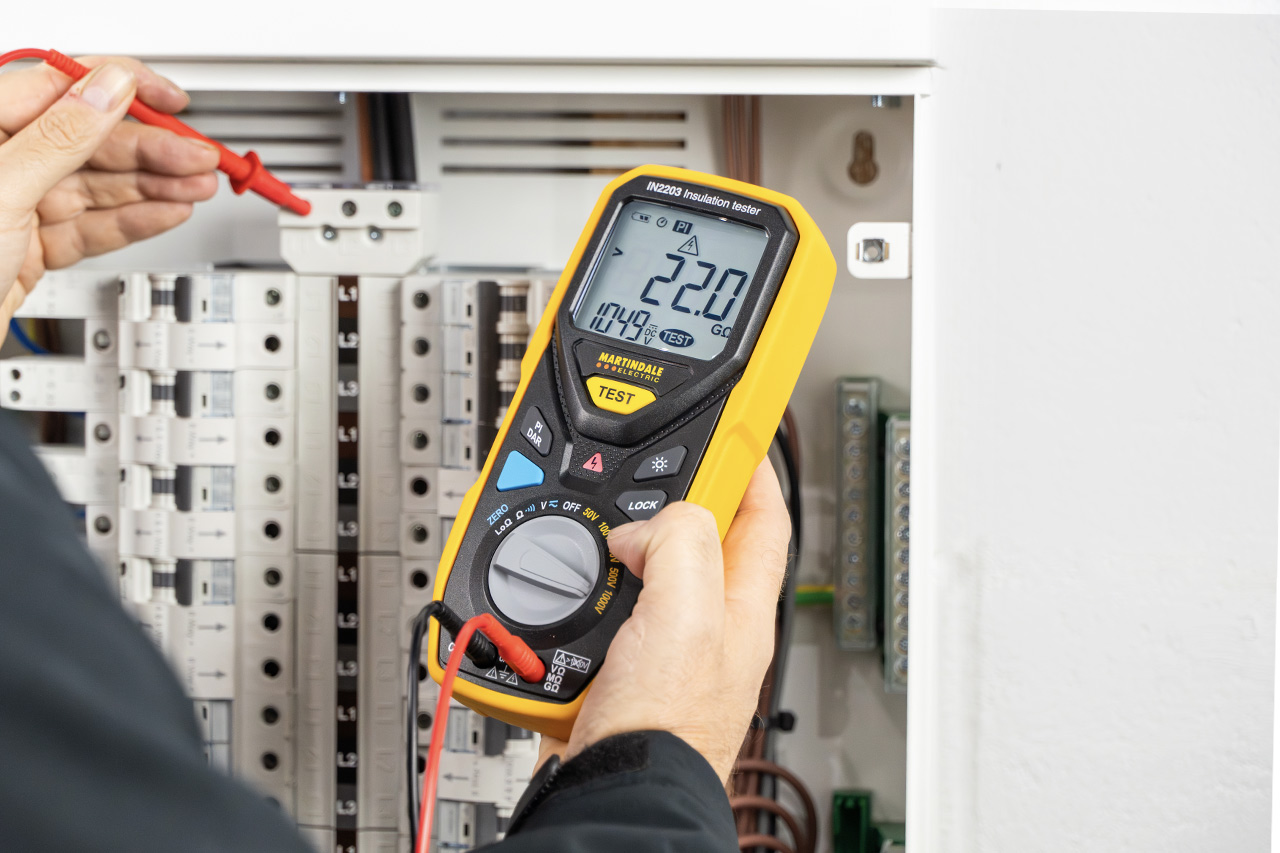
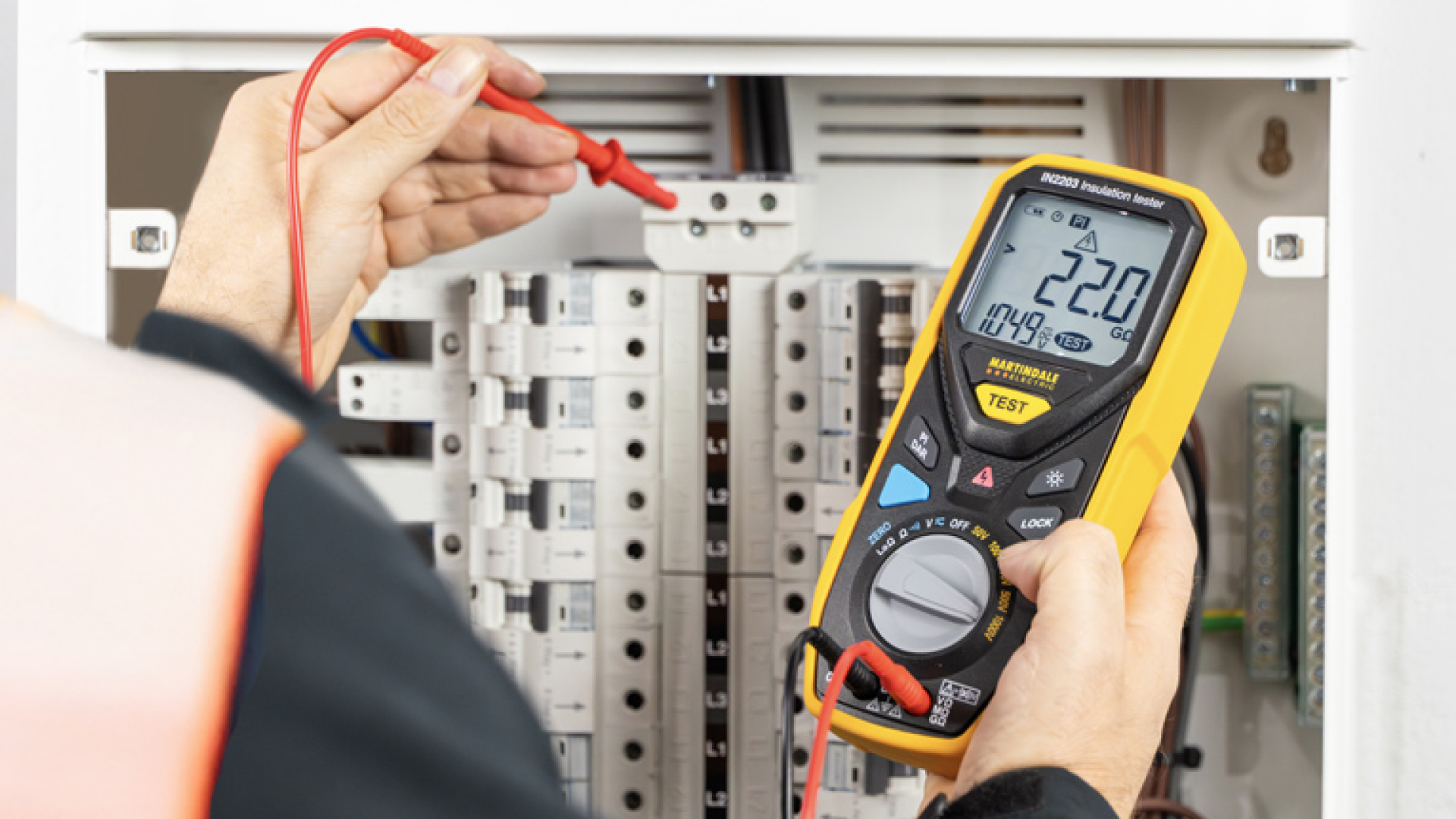
Reliable insulation is essential for the safe operation of electrical equipment such as motors, generators, transformers, and cables. Over time, insulation is exposed to thermal stress, electrical stress, contamination, and moisture, which can significantly reduce its performance and increase the risk of failure. The Martindale IN2203 Insulation tester is the ideal tool to evaluate insulation condition.
Beyond single-point insulation resistance values, more accurate diagnostic indices can be obtained by observing how the resistance changes over time. Two widely used methods are the Polarisation Index (PI) and the Dielectric Absorption Ratio (DAR).
What is PI ?
The Polarisation Index (PI) is a diagnostic measurement used mainly to assess the insulation condition of high-voltage equipment such as motors, generators, and transformers.
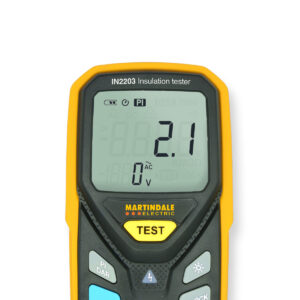
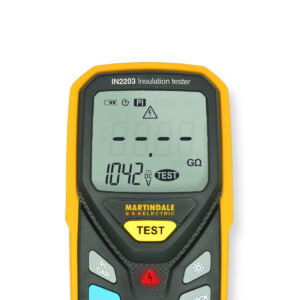
PI is the ratio of the insulation resistance measured at 10 minutes to the insulation resistance measured at 1 minute after applying a DC voltage test. When a DC voltage is applied, the current through the insulation initially includes three types of current:- Capacitive current due to the insulation, absorption current due to polarization and leakage current.
A healthy insulation system shows decreasing current over time (so resistance increases), giving a high PI however, if the insulation is wet, dirty, or deteriorated, the resistance doesn’t rise as much after the first minute, leading to a low PI.
PI helps identify moisture ingress, surface contamination, and insulation aging and is the preferred measurement for large rotating machines and transformers.
A typical PI Assessment would be:
- PI < 1.0 = Poor
- – 1.5 = Questionable
- 1.5 – 2.0 = Acceptable
- 2.0 = Good condition
What is DAR ?
Dielectric Absorption Ratio (DAR) is another insulation diagnostic test, similar to the Polarization Index (PI), but measured over a shorter time frame. It is the ratio of insulation resistance (IR) measured at 60 seconds to the IR measured at 30 seconds after applying a DC test voltage.
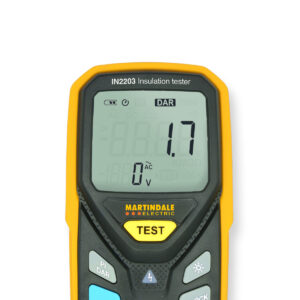
DAR provides a quick indication of insulation condition and is useful when time does not allow for the full 10 minute PI test. It is more commonly applied to smaller equipment or used in field service applications.
A typical DAR assessment would be:
- < 1.25 = Poor
- 1.25 – 1.6 = Marginal
- 1.6< = Good condition
Practical Application with the Martindale IN2203
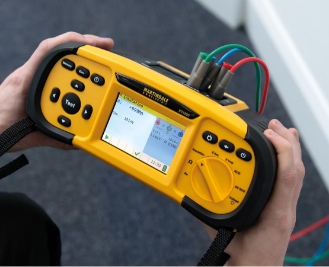
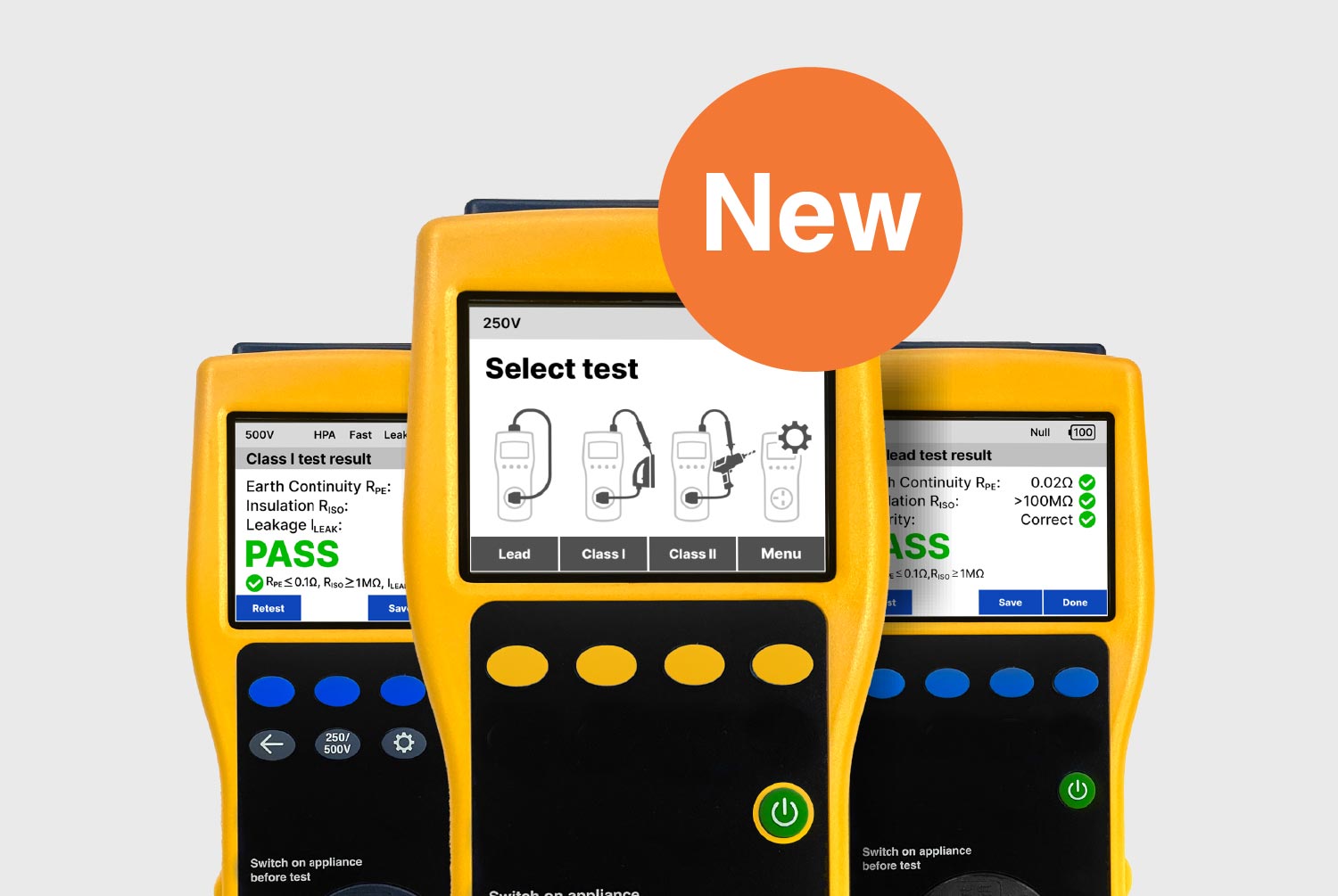
The Martindale IN2203 Advanced Insulation Tester is designed for both installation and service applications, combining multiple measurement functions in one compact unit.

It incorporates a fully featured insulation tester along with additional electrical measurement tools. For accurate assessment of insulation quality, the IN2203 includes dedicated measurement functions for both Polarisation Index (PI) and Dielectric Absorption Ratio (DAR). By automatically calculating these indices, the tester provides clear and reliable insights into insulation condition, ensuring engineers can quickly determine whether equipment is safe for continued operation by identifying potential issues with contamination, moisture ingress, or insulation aging.
Summary
The Polarisation Index (PI) and Dielectric Absorption Ratio (DAR) are powerful diagnostic tools for insulation testing. While DAR offers a fast screening method, PI provides a more thorough evaluation of long-term dielectric performance. Instruments such as the Martindale IN2203 Advanced Insulation Tester streamline this process by combining insulation resistance testing with automated PI and DAR calculations, giving engineers an efficient and reliable way to monitor insulation health in both installation and maintenance environments.